Raised Bed Pest Prevention Strategies
Garden Soap Team
· 8 min read
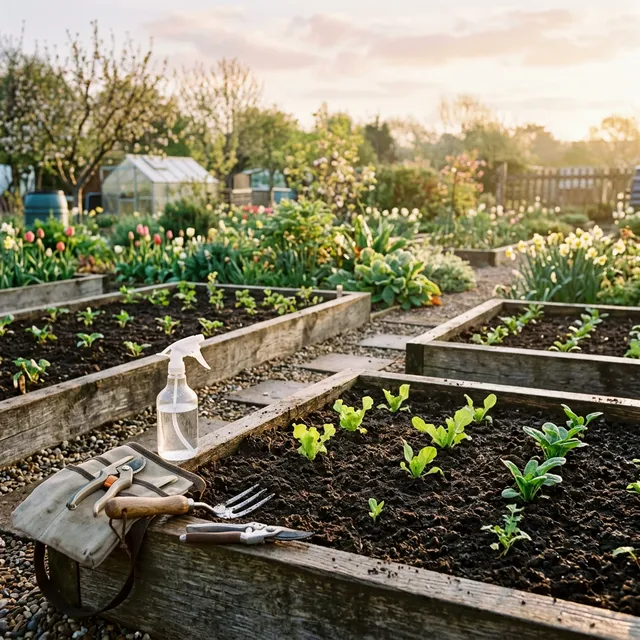
Why Raised Beds Are Better for Pest Prevention
Raised beds give you a structural advantage over in-ground gardening when it comes to pest control. That 8-24 inch elevation creates a physical barrier between your crops and the ground-level world where many pests live, travel, and breed.
But “better” doesn’t mean “pest-free.” Raised beds face the same flying insect pressure as any garden, and crawling pests can still climb the sides. The real advantage is that raised beds give you more control points — more places where you can intervene before pests reach your plants.
Think of your raised bed as a fortress. The walls are the first defense layer. Everything you add — barriers, companion plants, soil amendments, monitoring — strengthens the walls and fills the gaps.
Physical Barriers: Your First Line of Defense
Copper Tape for Slugs and Snails
Wrap copper tape (minimum 2 inches wide) around the outside of your raised bed frame, positioned 2-3 inches from the top. When a slug’s mucus contacts copper, it creates a mild electrical reaction that repels them.
Installation tips:
- Clean the wood surface before adhering the tape
- Overlap the tape at the join point — gaps defeat the purpose
- Position above the soil level so mulch or soil doesn’t bridge over the copper
- Clean tarnished copper with vinegar periodically to maintain its effectiveness
For more on slug control methods, see our organic slug and snail control guide.
Hardware Cloth for Burrowing Pests
Before filling your raised bed, line the bottom with 1/2-inch galvanized hardware cloth. This prevents moles, voles, and gophers from tunneling up into the bed from below.
Cut the hardware cloth to fit the bed dimensions plus 3-4 inches on each side. Fold the edges up and staple them to the inside walls of the bed. The mesh is fine enough to stop rodents but allows water drainage and root penetration.
Row Covers for Flying Insects
Lightweight floating row covers (Agribon AG-19 or similar) draped over hoops create a physical barrier against cabbage moths, whiteflies, flea beetles, and other flying pests. Row covers transmit 85-95% of sunlight and allow rain and irrigation through while completely excluding insects.
Install row covers at planting time for brassicas (kale, broccoli, cabbage), which are heavily targeted by cabbage white butterflies. Remove covers when plants begin to flower if they need pollination (beans, squash, tomatoes), or leave them on all season for crops that don’t need pollination (greens, root vegetables).
Raised Bed Netting
For larger pests — birds, squirrels, rabbits — secure bird netting or hardware cloth lids over the bed. PVC hoops or a simple wooden frame covered with 1/2-inch mesh creates a removable cage that protects crops while allowing full light and airflow.
Soil Health: The Foundation of Pest Prevention
Healthy soil produces healthy plants, and healthy plants resist pests far better than stressed ones. Raised beds give you complete control over soil composition — use that advantage.
Start With Clean Fill
Never fill raised beds with soil from existing garden beds. That soil carries weed seeds, fungal pathogens, nematode eggs, and pest larvae that transfer directly to your new growing space. Use a mix of:
- 50-60% quality topsoil (screened, from a reputable supplier)
- 30-40% finished compost
- 10% aged manure or worm castings
This blend provides excellent drainage, fertility, and biological activity from day one.
Build Soil Biology
Healthy soil is alive with beneficial organisms that suppress pests naturally. Mycorrhizal fungi improve plant root health and nutrient uptake. Predatory nematodes attack soil-dwelling pest larvae. Beneficial bacteria compete with pathogens for space and nutrients.
Feed the soil biology:
- Add compost annually — 1-2 inches topdressed in spring
- Avoid synthetic fertilizers that disrupt soil microbiology
- Minimize tilling — no-dig methods preserve fungal networks and predatory insect habitat
- Plant cover crops in winter (crimson clover, winter rye) to keep soil biology active year-round
Soil Amendments That Deter Pests
Diatomaceous earth mixed into the top inch of soil creates a hostile surface for crawling pests like cutworms, root maggots, and slug eggs. It works by physical abrasion, not chemistry, so pests can’t develop resistance. See our diatomaceous earth guide for application rates and methods.
Neem seed meal worked into soil provides slow-release azadirachtin that deters soil-dwelling pests and acts as a fertilizer. It’s especially effective against fungus gnats, root aphids, and grubs.
Companion Planting in Raised Beds
The compact space of a raised bed makes companion planting more effective because plants are closer together, creating denser chemical and scent interactions.
Border Planting
Plant a ring of pest-deterrent species around the perimeter of each raised bed:
| Border Plant | What It Deters | Notes |
|---|---|---|
| Marigolds | Whiteflies, aphids, nematodes | French marigolds are most effective |
| Chives | Aphids, carrot flies, Japanese beetles | Perennial — plant once, harvests for years |
| Basil | Aphids, whiteflies, mosquitoes | Interplant with tomatoes for best effect |
| Nasturtiums | Aphids (trap crop) | Plant on the outside edge to draw aphids away |
| Sweet alyssum | Attracts beneficial hoverflies and parasitic wasps | Low-growing, fills gaps between plants |
For the complete companion planting chart, see our companion planting for pest control guide.
Interplanting
Within the bed, alternate pest-prone crops with pest-deterrent herbs:
- Tomatoes + basil — basil’s estragole deters aphids and whitefly moths
- Brassicas + dill — flowering dill attracts parasitic wasps that target cabbage worms
- Carrots + chives — allium compounds mask the carrot scent that attracts carrot rust flies
- Lettuce + garlic — sulfur compounds deter aphids from settling on lettuce leaves
Monitoring and Early Detection
Prevention is wasted if you don’t catch problems early. Raised beds make monitoring easier because the growing surface is concentrated, elevated, and accessible from all sides.
Weekly Inspection Routine
- Check leaf undersides — flip 10-15 leaves on each plant, looking for eggs, nymphs, and early colonies
- Examine stem bases — look for cutworm damage, slug trails, and fungal lesions
- Inspect growing tips — aphids cluster on new growth first
- Look for frass — caterpillar droppings (small dark pellets) on leaves indicate active feeding
- Check soil surface — slug trails, ant lines, and fungus gnat activity are visible on the soil
Sticky Traps for Monitoring
Place yellow sticky traps at canopy height in each raised bed. They won’t control an infestation, but they provide early warning of whitefly, fungus gnat, and thrip arrival. Check traps weekly and treat immediately if pest numbers increase.
The Response Protocol
When monitoring reveals a pest problem, respond proportionally:
| Pest Level | Response |
|---|---|
| A few insects on one plant | Hand-pick, water blast, or spot-spray with insecticidal soap |
| Clusters on several plants | Targeted soap spray on infested areas, inspect daily |
| Widespread across the bed | Full soap spray treatment, 3-4 applications at 5-7 day intervals |
| Established colony with damage | Soap spray + neem oil follow-up, remove heavily damaged material |
Early detection turns a potential crisis into a five-minute spot treatment. That’s the real power of consistent monitoring.
Seasonal Pest Prevention Calendar
Early Spring
- Inspect bed frames for overwintering pest eggs and cocoons — scrape off and dispose
- Install copper tape before slug season begins
- Add fresh compost topdressing
- Plant early brassica transplants under row covers
- Set up sticky traps for early season monitoring
Late Spring / Early Summer
- Transplant warm-season crops with companion plant borders
- Install row covers on vulnerable crops
- Begin weekly monitoring inspections
- Apply spring pest prevention treatments as needed
Midsummer
- Peak pest pressure — monitor twice weekly
- Treat outbreaks promptly with soap spray
- Refresh copper barriers (clean tarnish with vinegar)
- Maintain companion plantings — replace bolted herbs with fresh plants
- Encourage beneficial insects by leaving some flowering herbs to bloom
Fall
- Remove spent plants promptly — don’t leave pest habitat
- Plant garlic cloves for next season’s pest-repelling allium border
- Sow cover crops to maintain soil biology through winter
- Clean and store row covers and netting
- Check bed frames for damage and repair before winter
Raised Bed Design for Pest Resistance
If you’re building new raised beds, incorporate pest resistance into the design:
Height matters. Beds 18-24 inches tall create a more effective barrier against crawling pests than 8-inch beds. The extra height makes copper tape barriers and hand-picking easier too.
Material choice. Cedar and redwood resist rot without chemical treatment. Avoid pressure-treated lumber in vegetable beds — the chemicals can leach into soil. Galvanized steel beds are increasingly popular and provide a smooth surface that’s harder for pests to grip than rough wood.
Spacing. Leave 2-3 feet between raised beds. This open space breaks pest travel corridors, improves air circulation (reducing fungal disease), and gives you room to walk and inspect all sides of each bed.
Orientation. Align beds north-south for even sun exposure. Good light produces strong, healthy plants that resist pest damage better than leggy, shaded ones.
The best raised bed pest prevention isn’t any single technique — it’s the combination of physical barriers, healthy soil, companion planting, and consistent monitoring working together. Each layer catches what the others miss. Build them all into your raised bed system, and you’ll spend far more time harvesting than spraying.
Related Articles
- How to Make Insecticidal Soap at Home: Complete DIY Recipe
- Insecticidal Soap Buying Guide: Everything You Need
- Insecticidal Soap for Cutworms
- Best Organic Pesticides for Vegetable Gardens
- Insecticidal Soap for Psyllids
- Insecticidal Soap for Leaf Miners
- Insecticidal Soap for Stink Bugs
- How to Get Rid of Whiteflies on Plants
Frequently Asked Questions
Do raised beds have fewer pest problems than in-ground gardens? ▼
Raised beds typically have fewer soil-borne pest problems because you start with clean fill and control the soil quality. Crawling pests like slugs and cutworms have a harder time reaching plants over raised bed walls. Flying pests like aphids and whiteflies, however, attack raised beds just as readily as in-ground gardens.
Should I put hardware cloth on the bottom of a raised bed? ▼
Yes, if you have moles, voles, or gophers in your area. Line the bottom of the raised bed with 1/2-inch hardware cloth before filling with soil. This prevents burrowing pests from entering from below while allowing water drainage and root penetration.
How do I keep squirrels out of raised beds? ▼
Cover raised beds with hardware cloth or chicken wire secured to a wooden frame. Removable lids work best — you can access the bed for planting and harvesting while keeping squirrels and other digging animals out. Floating row covers also work for protecting seedlings.
What should I fill raised beds with to prevent pests? ▼
Fill with a mix of quality topsoil, compost, and aged manure — never garden soil from in-ground beds, which contains weed seeds, pathogens, and pest eggs. Adding compost builds the soil biology that naturally suppresses many pest and disease organisms.
Do raised beds prevent slugs? ▼
Raised bed walls slow slugs down but don't stop them completely. Copper tape around the outside of the bed frame is the most effective barrier. A 2-inch copper strip creates an electrical deterrent that repels most slugs. Combine with iron phosphate bait inside the bed for thorough protection.
 ✓
✓ The Garden Soap Team writes every recipe and guide on this site. Formulas follow published horticultural guidance — university extension resources, the UC IPM program, and OMRI standards — and we cross-check concentrations and plant-safety warnings against documented gardener experience before publishing. No harsh chemicals, no guesswork passed off as expertise.
📚 Related Articles
learnSpring Garden Pest Prevention Guide
Spring is when garden pests emerge and populations explode. A proactive prevention plan saves you from fighting infestations all summer long.
 learn
learnCompanion Planting for Pest Control
Use companion planting to reduce pest pressure without sprays. Proven plant pairings for tomatoes, squash, brassicas, and more.
 learn
learnNatural Pest Control Methods That Actually Work
Proven natural pest control methods for gardens and homes. Insecticidal soap, beneficial insects, and companion planting — no synthetic chemicals needed.