Diatomaceous Earth for Gardens: Complete Guide
Garden Soap Team
· 8 min read

What Is Diatomaceous Earth?
Diatomaceous earth (DE) is a fine powder made from the fossilized remains of diatoms — microscopic algae with silica-based shells. When viewed under a microscope, each particle has razor-sharp edges that are harmless to humans and animals but lethal to insects.
When a crawling insect walks across DE, the sharp particles scratch through its waxy exoskeleton. That waxy layer is what keeps moisture inside the insect’s body. Once it’s compromised, the insect dehydrates and dies within 24-48 hours. No chemicals involved — it’s purely mechanical damage.
This is both DE’s greatest strength and its biggest limitation. It works on any insect with an exoskeleton, which means it’s non-selective. It kills garden pests and beneficial insects equally. Smart application — targeting specific problem areas rather than blanketing the entire garden — is what makes DE a useful tool instead of an ecological blunt instrument.
Food-Grade vs. Pool-Grade: A Critical Distinction
This matters more than anything else in this article.
Food-grade DE contains less than 1% crystalline silica. It’s approved by the FDA as a food additive and by OMRI for organic gardening. This is what you want.
Pool-grade DE (also called filter-grade) is chemically treated and calcined at high temperatures, producing up to 60% crystalline silica. Inhaling pool-grade DE causes serious respiratory damage, including silicosis. It has no place in a garden.
When buying DE, the label must say “food grade.” Look for a food-grade bag with a powder duster — Harris Food Grade Diatomaceous Earth is a common listing that includes one. DiatomaceousEarth.com Food Grade DE is another label-check option.
Which Garden Pests Does DE Control?
DE works on crawling insects that travel across treated surfaces. It’s ineffective against flying pests that never land where DE is applied.
Highly Effective Against
| Pest | Where to Apply DE | Notes |
|---|---|---|
| Slugs and snails | Ring around plant bases | They won’t cross the barrier |
| Ants | Along trails, around mounds, plant bases | Disrupts colony access to aphid farms |
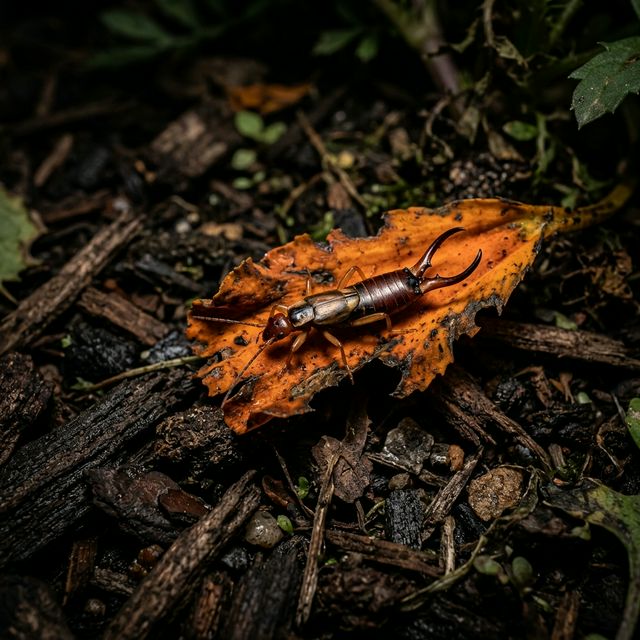
| Earwigs | Base of plants, under mulch edges | Night-active; apply late in the day |
| Pill bugs/roly-polies | Soil surface, garden borders | Only treat if damaging seedlings |
| Flea beetles | Dust on lower leaves and soil surface | Reapply frequently |
| Cucumber beetles | Around cucumber and squash bases | Combined with companion planting |
| Squash bugs | Base of squash plants, under leaves | Dust lightly near egg-laying sites |
Less Effective Against
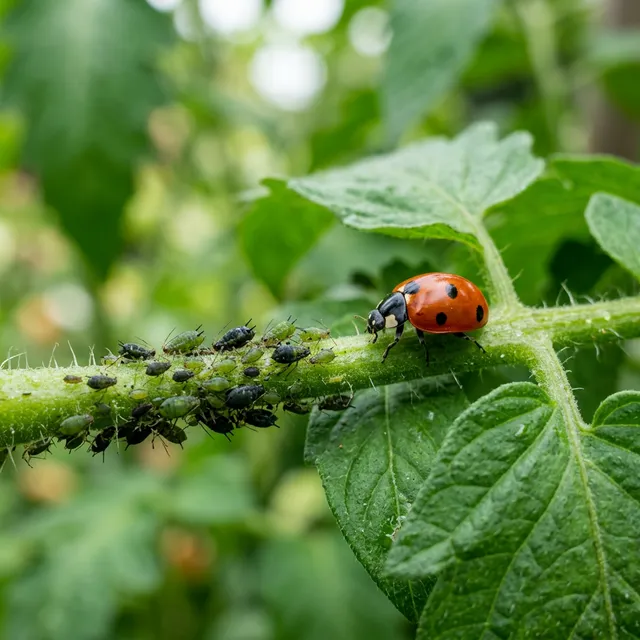
- Aphids — they cluster on plant parts above where DE sits. Insecticidal soap is far more effective.
- Spider mites — too small and too high on the plant. Soap spray or neem oil work better.
- Whiteflies — flying pests that rarely contact soil-level DE.
- Caterpillars — large caterpillars can power through DE without lethal damage. Use Bt spray instead.
Think of DE as a ground-level defense perimeter. It’s excellent at stopping crawling pests from reaching your plants but useless against the flying and climbing insects that approach from above.
How to Apply Diatomaceous Earth in the Garden
Method 1: Dry Dusting (Most Effective)
Dry application is the most reliable method because DE works through physical contact with dry particles.
Tools needed: A powder duster, a flour sifter, or even a sock filled with DE (shake to dust).
Around plant bases: Create a 2-3 inch wide ring of DE around the stems of plants you want to protect. This stops slugs, earwigs, and other crawling pests from reaching the foliage. Renew the ring after rain.
Along garden borders: Dust a continuous line of DE along bed edges, around raised bed frames, and at entry points where pests access your garden from surrounding areas.
On lower foliage: For flea beetles and cucumber beetles, dust DE directly onto lower leaves. The beetles pick up particles as they feed, and the mechanical damage kills them within 24-48 hours.
Around ant mounds: Dust DE liberally around ant colony entrances and along visible ant trails. Ants carry particles back to the colony, spreading the effect. This is especially useful in gardens where ants are farming aphid colonies — removing the ant protection often lets natural predators control the aphids.
Method 2: Wet Application (Spray)
Mix 4 tablespoons of DE per gallon of water. Stir frequently and spray onto plant surfaces. The wet spray goes on as a liquid and deposits a visible white film as it dries. DE only works once completely dry, so this method requires a few hours of dry weather after application.
Wet application is useful for reaching the tops of plants where dry dusting is impractical. It’s less effective than dry dusting because the coating is thinner and less uniform.
Method 3: Soil Surface Treatment
For soil-dwelling pests (grubs, root maggots, ground-nesting beetles), sprinkle DE across the soil surface and work it lightly into the top half-inch with a rake. Don’t till it deep — you’ll dilute the concentration and potentially harm earthworms in moist subsoil.
Timing and Weather Considerations
Apply in dry conditions. This is the most important rule. Wet DE is completely inert. The sharp particles only damage insect exoskeletons when dry. Morning application after dew has evaporated works best.
Reapply after rain. Even light rain can render a DE application useless. Check treated areas after any precipitation and reapply as needed.
Avoid windy days. DE is a fine powder that blows around easily in wind. Apply on calm days to keep the product where you put it and to minimize inhalation risk.
Evening for slugs. If slugs are your primary target, apply DE in the late afternoon before slugs become active at dusk. A fresh, dry barrier is most effective during their nighttime feeding runs.
Safety Precautions
Even food-grade DE requires basic safety practices:
Wear a dust mask. Fine silica dust irritates lungs when inhaled in quantity. A standard N95 mask provides adequate protection during application. This is a short-term precaution — settled DE on garden surfaces poses no inhalation risk.
Protect your eyes. DE particles can irritate eyes. Safety glasses or regular glasses provide enough protection during dusting.
Keep dry DE away from pets. While food-grade DE is non-toxic if ingested, the dust can irritate pet airways if they sniff directly at piles of it. Apply thinly and let it settle before allowing pets in treated areas.
Don’t apply to flowers. DE on flower petals kills pollinators (bees, butterflies, hoverflies) that contact it. Keep DE applications below the flower line on any blooming plant.
DE and Beneficial Insects: Finding the Balance
This is DE’s biggest drawback. It doesn’t distinguish between pests and allies. Ground beetles, which eat slugs and caterpillars, are killed just as efficiently as the pests you’re targeting. Same with ladybugs that land in treated areas.
Targeted application is the only way to minimize collateral damage:
- Apply only where you have confirmed pest activity
- Create narrow barrier lines rather than broadcasting across entire beds
- Avoid areas where you see beneficial insects actively hunting
- Don’t dust under mulch where ground beetles shelter during the day
- Stop DE applications once pest pressure decreases
Pair DE with methods that preserve beneficials. Insecticidal soap sprays only kill insects they directly contact and have zero residual effect once dry. Companion planting attracts predators that provide ongoing control without killing anyone. DE works best as one tool in a diverse toolkit, not as your only pest management strategy.
Combining DE with Other Organic Methods
DE is most effective when integrated into a broader pest management plan rather than used in isolation.
DE + insecticidal soap: Use DE as a ground-level barrier and soap spray for above-ground pests like aphids and whiteflies. The soap handles what DE can’t reach, and DE blocks crawling reinforcements.
DE + neem oil: Neem provides systemic plant protection against feeding insects, while DE creates physical barriers against crawling pests. Together, they cover both aerial and ground-level pest pathways.
DE + companion planting: Marigold borders deter flying pests above ground while DE barriers stop slugs and crawling insects below. This layered approach is integrated pest management at its most practical.
DE for ant control near aphid colonies: Ants actively protect aphid colonies from predators, carrying ladybug larvae away and fighting off parasitic wasps. A DE ring around the plant base kills ants as they climb, removing the bodyguard service and letting natural predators dismantle the aphid colony.
Common Questions About Diatomaceous Earth
Does DE expire? No. As long as it stays dry, food-grade DE retains its effectiveness indefinitely. It’s fossilized rock — it doesn’t degrade, decompose, or lose potency over time. A bag stored in a dry location will work just as well in ten years.
Can I use DE in potted plants? Yes. Sprinkle a thin layer on the soil surface of container plants to control fungus gnats, ants, and other crawling pests. For fungus gnats specifically, a neem oil soil drench may be more effective since it targets the larvae in the growing medium.
Does DE kill nematodes? DE is too coarse to affect microscopic soil nematodes. For nematode control, marigold companion planting is the proven organic approach — their roots release compounds directly toxic to root-knot nematodes.
Is DE safe for raised bed gardens? Perfectly safe. Apply to soil surfaces within raised beds just as you would in ground-level gardens. The contained structure of raised beds actually makes DE more effective since crawling pests have limited access points you can easily treat.
The Bottom Line
Diatomaceous earth is a reliable, non-toxic tool for controlling crawling garden pests — when you understand its limitations. It won’t solve aphid problems, stop caterpillars, or protect against flying insects. But for slugs, ants, earwigs, and ground-level beetles, a properly applied DE barrier works consistently and cheaply.
Use it as one component of a broader organic pest control strategy. Pair it with insecticidal soap for above-ground pests, neem oil for systemic protection, and smart garden design (companion planting, crop rotation, beneficial insect habitat) for long-term prevention.
Listing checks before you buy
DE listings mix food-grade bags with pool-filter powder. The Garden Soap Team check is the label, not a brand trial.
- Food grade only: The bag must say “food grade.” Pool-grade / filter-grade is calcined and is not a garden product.
- Duster in the box: A powder duster makes a thin barrier. A sock or sifter also works — you do not need a second tool listing.
- What DE cannot do: Flying and climbing pests (aphids, whiteflies, mites) need insecticidal soap, not a soil ring. For slugs, see organic slug control. For earwigs, see earwig soap notes.
- Above-ground follow-up: Pair a ground barrier with the core soap how-to or a neem oil soap mix for pests that never walk the soil.
Keep a bag of food-grade DE in the garden shed. You’ll reach for it more often than you expect.
Frequently Asked Questions
Is diatomaceous earth safe for vegetable gardens? ▼
Food-grade diatomaceous earth is safe for vegetable gardens and is approved for organic growing by the OMRI. It leaves no toxic residue and can be applied directly around edible crops. Always use food-grade DE, never pool-grade, which is chemically treated and dangerous to inhale.
How often do you need to reapply diatomaceous earth? ▼
Reapply after every rain or heavy watering, because DE loses effectiveness when wet. In dry conditions, a single application lasts 1-2 weeks. During rainy periods, you may need to reapply every few days. Some gardeners dust lightly after each morning watering session.
Does diatomaceous earth kill earthworms? ▼
DE can harm earthworms if they encounter dry concentrations on the soil surface, but earthworms primarily live in moist soil below the surface where DE is inactive. Apply DE to dry surfaces only and avoid tilling large amounts into the soil to protect your earthworm population.
Can you mix diatomaceous earth with water and spray it? ▼
You can mix DE with water at a ratio of 4 tablespoons per gallon and spray it onto plants. Once the water evaporates, the DE dries as a visible residue on leaf surfaces. This is useful for reaching plant tops, but the DE only works after it dries completely.
Will diatomaceous earth kill beneficial insects? ▼
Yes — DE is non-selective and will damage any insect with an exoskeleton that crosses it, including ladybugs, ground beetles, and bees. Apply only to specific problem areas, not broadcast across the entire garden. Avoid dusting flowers where pollinators are active.
 ✓
✓ The Garden Soap Team writes every recipe and guide on this site. Formulas follow published horticultural guidance — university extension resources, the UC IPM program, and OMRI standards — and we cross-check concentrations and plant-safety warnings against documented gardener experience before publishing. No harsh chemicals, no guesswork passed off as expertise.
📚 Related Articles
learnNatural Pest Control Methods That Actually Work
Proven natural pest control methods for gardens and homes. Insecticidal soap, beneficial insects, and companion planting — no synthetic chemicals needed.
 guides
Insecticidal Soap for Earwigs
Earwigs devour seedlings and soft flowers at night. Learn whether insecticidal soap kills earwigs and the most effective organic traps and controls.
 learn
learnCommon Garden Pests: Visual Identification Guide
Can't figure out what's eating your plants? Identify the 10 most common garden pests and learn which ones insecticidal soap can eliminate.