Insecticidal Soap for Cutworms
Garden Soap Team
· 8 min read
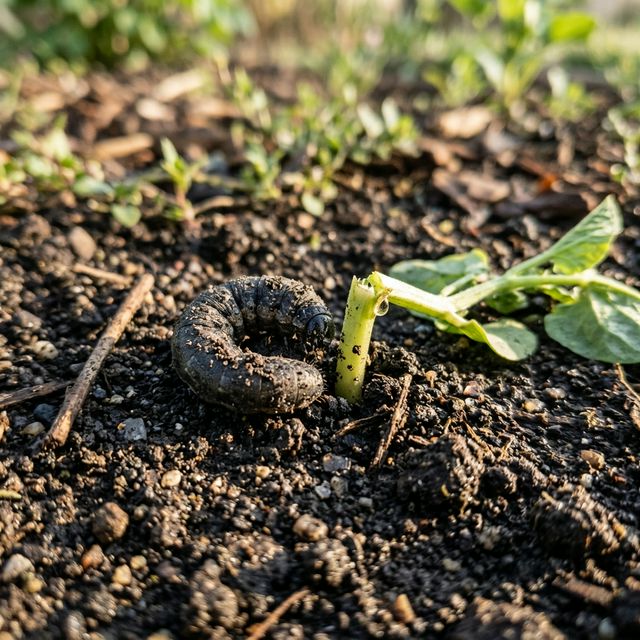
The Overnight Seedling Killer
You transplant healthy seedlings in the afternoon. The next morning, several are toppled over, their stems cleanly severed at ground level as if someone cut them with scissors. Nothing is visibly wrong above or below the cut, the culprit is hiding underground, curled up in the top inch of soil, sleeping off its midnight meal.
Cutworms are among the most frustrating garden pests because the damage is so sudden, so total, and so invisible until it’s too late. A single cutworm can destroy several seedlings in one night by cutting through stem after stem, often eating only a small portion of each plant.
If you’re reading this because you just lost transplants and are wondering if insecticidal soap can help, I have to be direct: soap spray won’t solve this problem. But proven, simple solutions exist.
Why Insecticidal Soap Doesn’t Work on Cutworms
Three factors make soap spray useless against cutworms:
1. They’re underground during spray time. Cutworms feed at night and burrow into the top 1-2 inches of soil at dawn. When you spray during the day, they’re hidden beneath the surface where soap can’t reach them.
2. Contact-only kills don’t help. Even if you went out at midnight with a spray bottle, soap has zero residual effect once dry. It can’t create a protective barrier around your seedlings.
3. Their cuticle resists soap. Cutworm caterpillars are plump, thick-skinned, and relatively large (1-2 inches long). Like other caterpillars (cabbage worms, cabbage loopers), they don’t have the thin, vulnerable membrane that soap is designed to penetrate.
| Why Soap Works on Aphids | Why Soap Fails on Cutworms |
|---|---|
| Aphids are on leaf surfaces during the day | Cutworms hide underground during the day |
| Aphids are 1-3mm with thin cuticles | Cutworms are 25-50mm with thick cuticles |
| Aphids cluster in groups | Cutworms are solitary, scattered |
| Aphids can’t escape quickly | Cutworms retreat underground instantly |
| Soap needs only surface contact | Cutworms need subterranean control |
Understanding Cutworms
Types of Cutworm Behavior
Not all cutworms operate the same way:
Surface cutworms (the most common type), chew through stems at or just below the soil line. These cause the classic “mowed down seedling” damage. Species include the black cutworm, dingy cutworm, and granulate cutworm.
Climbing cutworms, climb plants at night and feed on foliage, buds, and fruit higher up. Variegated cutworm and spotted cutworm exhibit this behavior. More common on tomatoes and peppers.
Subterranean cutworms, feed entirely below the soil surface on roots and underground stems. Less common but more difficult to detect. The pale western cutworm is an example.
Life Cycle
- Moths, adult cutworm moths are dull brown or gray, nocturnal, and attracted to lights. They lay eggs in grass, weeds, and crop residue in late summer and fall.
- Overwintering, most species overwinter as eggs or young larvae in the soil.
- Spring activity, larvae resume feeding in early spring when soil warms. This is the primary damage period.
- Pupation, larvae pupate in the soil in late spring to early summer.
- Adult emergence, moths emerge in summer, mate, and lay eggs for the next generation.
Identification
Cutworms are plump caterpillars, 1-2 inches long when mature:
- Gray, brown, or greenish, often with faint stripes or spots
- Smooth skin (no prominent hairs)
- Curl into a tight C-shape when disturbed
- Found in the top 1-2 inches of soil near damaged plants
- Most active on mild, overcast nights
To find them, go out after dark with a flashlight and check the soil surface around damaged plants. Or in the morning, dig gently in the soil within 3-4 inches of a freshly cut seedling, the cutworm is almost always nearby.
The Best Organic Cutworm Controls
1. Physical Collars (The Gold Standard)
Simple physical barriers around seedling stems are nearly 100% effective against surface-cutting cutworms:
Cardboard tube collars:
- Cut toilet paper or paper towel tubes into 3-inch sections
- Push 1 inch into the soil, leaving 2 inches above ground
- Place around each seedling at transplanting time
Cardboard strip collars:
- Cut lightweight cardboard into strips about 3 x 8 inches
- Form into a circle around the seedling stem
- Staple or tape closed
- Push 1 inch into soil
Plastic cup collars:
- Cut the bottom off a solo cup or yogurt container
- Press into soil around the seedling
- These last longer than cardboard and can be reused season to season
Aluminum foil wraps:
- Wrap a 3-inch strip of aluminum foil loosely around each stem
- Extend from 1 inch below soil surface to 2 inches above
- Effective and free if you have foil on hand
The collar needs to extend at least 1 inch below the soil surface (cutworms approach from underground) and 2 inches above (to prevent climbing over). Keep collars in place for 2-3 weeks until stems harden and thicken enough to resist cutting.
2. Bt for Cutworms
While soap doesn’t work, Bt (Bacillus thuringiensis var. kurstaki) can kill cutworms that consume treated plant tissue:
- Spray Bt on the lower stems and leaves of seedlings
- Also spray the soil surface around the base of plants
- Apply in late afternoon so the Bt is fresh when cutworms emerge to feed at night
- Reapply every 5-7 days during the critical early-season window
- Works best on small, young cutworms
Bt is less reliable for cutworms than for cabbage worms because cutworms may cut the stem without consuming enough treated tissue to receive a lethal dose. Use Bt as a supplement to physical barriers, not a replacement.
3. Diatomaceous Earth
Food-grade diatomaceous earth (DE) sprinkled in a ring around each seedling provides a deterrent:
- The microscopic sharp particles damage cutworm cuticles as they crawl through
- Apply a 2-inch-wide band around each seedling
- Extend outward from the stem to create a protective zone
- Reapply after rain or watering
- Most effective when soil surface is dry
4. Beneficial Nematodes
Steinernema carpocapsae nematodes are tiny, beneficial worms that actively hunt cutworm larvae in the soil:
- Apply to moist soil in early spring when soil temperatures reach 50°F
- Water in thoroughly
- Nematodes enter cutworm larvae and release bacteria that kill them within 48 hours
- Provides ongoing control as nematodes reproduce in the soil
- Also controls other soil-dwelling pests
5. Hand-Picking at Night
Go out after dark with a flashlight:
- Check the soil surface around any freshly damaged plants
- Look for cutworms feeding on stems or resting on the soil surface
- Drop them into soapy water (here’s where soap actually helps, as a drowning medium)
- Check every night for the first 2 weeks after transplanting
This is tedious but effective in small gardens. You’ll quickly reduce the local population.
Cultural Practices That Reduce Cutworm Damage
Before Planting
Clear the area 2 weeks early. Mow or till the garden area at least 2 weeks before transplanting. This removes the weeds and grass that cutworm moths laid their eggs in and forces existing cutworms to either pupate or starve before your seedlings arrive.
Avoid planting into freshly tilled sod. Recently tilled grass or weedy areas are the highest-risk locations for cutworm damage. If converting lawn to garden, prepare the bed at least a month before planting.
Remove surface debris. Cutworms shelter under plant residue, rocks, and debris during the day. A clean soil surface makes the area less hospitable.
At Planting Time
Transplant larger seedlings. Cutworms target thin, tender stems. Seedlings with stems thicker than a pencil are much more resistant. Start seeds earlier indoors and transplant when they’re sturdy.
Set transplants slightly deeper. A seedling planted 1/2 inch deeper than usual has a slightly thicker, more resistant stem at the soil line.
Install collars on every transplant. Make it part of your transplanting routine. The 30 seconds per seedling is worth the insurance.
During the Growing Season
Keep the garden weeded. Weeds provide food and shelter for cutworms.
Water in the morning. Dry soil surfaces at night make cutworms slightly less active and reduce the moist conditions they prefer.
Encourage ground beetles. These nocturnal predators eat cutworms. Maintain some mulch at the garden edges (even as you reduce it near seedlings) and avoid tilling unnecessarily to preserve their habitat.
Protecting Specific Crops
Tomatoes and Peppers
Most vulnerable in the first 2-3 weeks after transplanting:
- Use collars on every transplant
- Apply Bt to lower stems
- Plant through red or black plastic mulch, the tight fit around stems can deter cutworms
- Once stems reach pencil thickness, the risk drops dramatically
Lettuce and Leafy Greens
Vulnerable throughout their growth because stems stay tender:
- Collars for individual plants
- Consider growing in raised beds with clean soil
- Succession planting ensures replacements are ready if early plantings are lost
Corn and Beans
Direct-seeded crops can’t receive individual collars easily:
- Apply beneficial nematodes to soil before planting
- Use Bt as a soil surface spray at planting time
- Plant extra seeds and thin to compensate for losses
- Corn is most vulnerable at the 1-3 leaf stage
Flowers
Annual flower transplants are just as vulnerable as vegetables:
- Use the same collar strategy
- Marigolds, petunias, zinnias, and impatiens are common targets
- Established perennials are generally safe (thick stems and root reserves)
Natural Predators
Several animals actively hunt cutworms:
- Ground beetles, nocturnal predators that patrol the soil surface at night
- Firefly larvae (glowworms), voracious subterranean predators of cutworm larvae
- Birds, robins, starlings, and crows dig for cutworms. Birds following a tiller are eating exposed cutworms and grubs.
- Toads, a single toad in the garden eats many cutworms and other soil-dwelling pests each night
- Parasitic wasps, several species parasitize cutworm larvae and pupae
Create habitat for these predators:
- Provide a shallow water dish for toads (set flush with the ground)
- Maintain some permanent plantings and mulched areas for ground beetles
- Install bird feeders and birdbaths near the garden
- Minimize tilling to preserve ground-dwelling predator populations
The Cutworm Prevention Checklist
- Prepare garden beds 2+ weeks before planting
- Remove weeds and debris from planting area
- Start seedlings indoors for larger, more resistant transplants
- Make collars before transplanting day
- Install collars at transplanting time (1 inch below soil, 2 inches above)
- Apply beneficial nematodes to soil in early spring
- Scout with a flashlight for the first two weeks after planting
- Remove collars after 3 weeks when stems harden
- Maintain weed-free garden during growing season
- Clean up garden debris in fall to reduce overwintering sites
For more on protecting your garden from early-season pests, see our spring garden pest prevention guide and our broader natural pest control methods overview.
Frequently Asked Questions
Does insecticidal soap kill cutworms? ▼
Insecticidal soap is ineffective against cutworms. These caterpillars feed at night at the soil surface, hide underground during the day, and have relatively thick cuticles. Physical barriers like cardboard collars around seedling stems are far more effective.
What are cutworms? ▼
Cutworms are the larvae of several species of night-flying moths. They're plump, gray-brown caterpillars that curl into a C-shape when disturbed. They hide in the soil during the day and emerge at night to chew through seedling stems at ground level.
How do I stop cutworms from killing my seedlings? ▼
Place physical collars around each seedling stem at planting time. Cut toilet paper tubes, cardboard strips, or plastic cups with the bottom removed and push them 1 inch into the soil around the stem. Cutworms can't chew through or climb over the barrier.
When are cutworms most active? ▼
Cutworms are most active in early to mid spring when they emerge from overwintering eggs or pupae. They do the most damage to young seedlings and transplants during the first 2-3 weeks after planting. Once stems harden and thicken, plants are generally safe.
 ✓
✓ The Garden Soap Team writes every recipe and guide on this site. Formulas follow published horticultural guidance — university extension resources, the UC IPM program, and OMRI standards — and we cross-check concentrations and plant-safety warnings against documented gardener experience before publishing. No harsh chemicals, no guesswork passed off as expertise.
📚 Related Articles
 guides
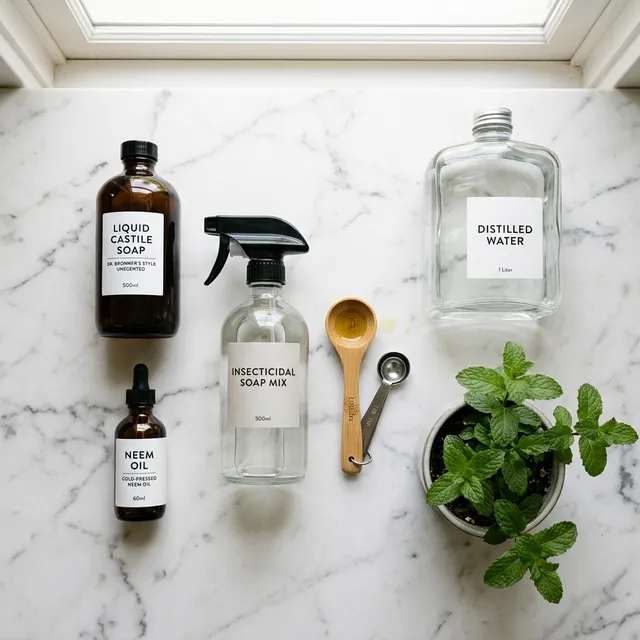
How to Make Insecticidal Soap at Home
Core 3-ingredient method: 1 tablespoon unscented castile per quart, leaf-underside coverage, and the mixing mistakes that burn plants.
guidesNatural Pesticides for Vegetable Gardens
Six extension-guided tools for edible beds: contact soap first, then neem, Bt, and companions. Ranked by pest — not by the loudest organic label.
 learn
learnSpring Garden Pest Prevention Guide
Spring is when garden pests emerge and populations explode. A proactive prevention plan saves you from fighting infestations all summer long.