What Is Insecticidal Soap and How Does It Work?
Garden Soap Team
· Updated February 19, 2026 · 8 min read
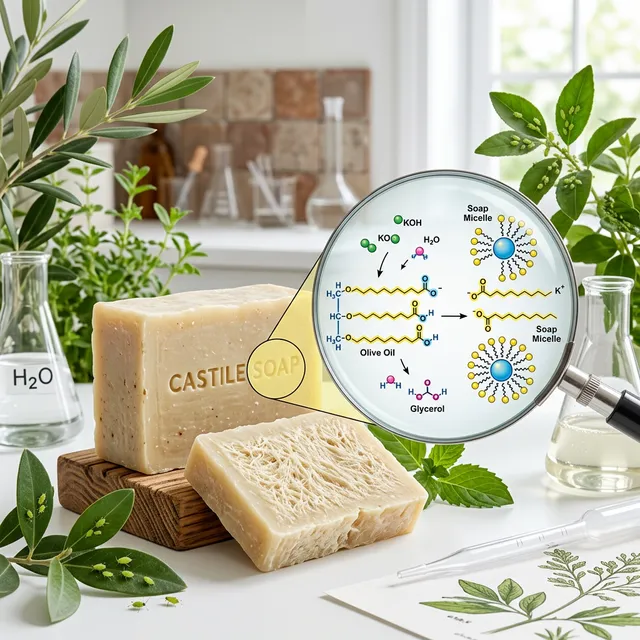
Plain soapy water sounds too simple to kill aphids. The chemistry is not folk wisdom: potassium salts of fatty acids dissolve a soft-bodied insect’s waxy cuticle on contact. That is why a kitchen castile mix and a labeled commercial soap can do the same job — and why dry soap on a leaf has zero residual.
A Brief History
People have been using soap to control garden pests for over 200 years. The earliest documented use dates to the late 1700s, when European farmers discovered that runoff from soap-making killed plant lice (what we now call aphids). By the mid-1800s, “whale-oil soap” was a commercially sold garden product in both Europe and North America (University of Connecticut Extension).
Today’s insecticidal soaps use plant-based oils instead of whale oil, but the active chemistry is identical: potassium salts of fatty acids. Your choice of soap matters, our guide on the best soap for insecticidal spray explains why pure castile soap outperforms everything else.
The Science of Insecticidal Soap
So how does soapy water actually kill bugs? It’s not the “soapiness” that matters, it’s the specific molecular structure of true soap.
Active Ingredient: Potassium Salts of Fatty Acids
When you dissolve soap in water, you create a solution rich in potassium salts of fatty acids. These are the same compounds found in commercial products like Safer Brand Insect Killing Soap.
The fatty acid chains are amphiphilic, one end attracts water, the other repels it. This dual nature is what makes soap useful for cleaning, and lethal for certain pests.
How It Kills Pests
The killing mechanism has three stages:
1. Cuticle Disruption
Every insect has a waxy outer cuticle that prevents water loss. When insecticidal soap contacts a soft-bodied pest, the fatty acids dissolve this waxy layer, much like how soap cuts through grease on dishes.
2. Cell Membrane Damage
Once the cuticle is breached, the fatty acids penetrate the insect’s cell membranes. This disrupts cellular function and causes leakage of internal fluids.
3. Dehydration
Without its protective cuticle and with damaged cell membranes, the insect rapidly dehydrates. Death typically occurs within hours of contact.
Why Soft-Bodied Pests Are Vulnerable
This mechanism explains why insecticidal soap is selective:
| Pest Type | Vulnerability | Why |
|---|---|---|
| Aphids | ✅ High | Thin, soft cuticle |
| Whiteflies | ✅ High | Soft body, exposed on leaf surfaces |
| Spider Mites | ✅ High | Tiny, minimal cuticle protection |
| Mealybugs | ✅ High | Waxy coating, but soft underneath |
| Japanese Beetles | ❌ Low | Hard, thick exoskeleton |
| Ladybugs | ❌ Low | Hard wing covers protect them |
Environmental Safety
One of insecticidal soap’s greatest advantages — and why extension IPM pages put it ahead of residual synthetics on edible beds — is its environmental profile:
- Biodegradable, breaks down within 1-2 days in soil and water (unlike synthetic alternatives, see natural pest control methods for the full comparison)
- No residual toxicity, safe for bees and butterflies once the spray dries (usually within an hour)
- No groundwater contamination, unlike neonicotinoids and organophosphates, soap doesn’t persist in waterways
- OMRI listed, approved for certified organic farming by the Organic Materials Review Institute
- Pollinator-friendly timing, since it only works wet, you can spray in early morning or evening when pollinators aren’t active, and by the time bees arrive, the soap has dried harmlessly
According to the UC Davis IPM Program, insecticidal soap is classified as one of the lowest-risk pesticide options available, making it suitable for use around vegetable gardens, children’s play areas, and near water features.
Limitations
Honesty about limits matters more than enthusiasm. Here is what insecticidal soap cannot do:
- Contact only, it must directly hit the pest to work. Once the spray dries, it has zero residual killing effect. Pests that arrive an hour later are completely unaffected.
- Won’t kill eggs, fatty acid salts only affect mobile life stages. Egg clusters will hatch unharmed, which is why repeated applications are essential.
- Weather-dependent, rain washes it off immediately. High heat (above 90°F) combined with wet soap on leaves can cause phytotoxicity, see our plant safety guide for the full list of sensitive species. Skip sprays during heat waves; wait for a cooler morning or evening.
- Repeated applications needed, typically every 4-7 days during active infestations. This isn’t a one-and-done solution.
- Ineffective against some pests, hard-shelled beetles, armored scale, and caterpillars are all unaffected.
Understanding these limitations helps you use insecticidal soap as part of an integrated pest management (IPM) strategy rather than a silver bullet. Soap is one tool beside companion planting, beneficial-insect habitat, and physical barriers like row cover.
The Bottom Line
Insecticidal soap works because of real, well-understood chemistry, not folk wisdom or placebo effect. It’s been validated by university extension programs, approved for organic certification, and used successfully by gardeners for over two centuries. If you’re ready to try it yourself, our step-by-step guide walks you through how to make insecticidal soap from scratch, or jump straight to the basic castile soap spray recipe. Kitchen mix vs a labeled bottle is homemade vs commercial insecticidal soap. All you need is pure castile soap, water, and a spray bottle.
Listing checks before you buy
The Amazon title “insecticidal soap” does not tell you if the chemistry is true soap. These are Garden Soap Team label checks — not a brand trial.
- True soap vs detergent: Look for unscented liquid castile or potassium salts of fatty acids. Skip “ultra,” antibacterial, and dish-soap listings. The soap selection guide lists what to avoid.
- Soft water: Distilled or rainwater. Hard tap water locks up fatty acids. If you will not buy distilled water, a labeled concentrate is the more forgiving spend.
- Concentration: About 1 tablespoon soap per quart (1%). A stronger listing is not a stronger kill. Above ~2% you buy phytotoxicity.
- When a commercial bottle is the backup: Same fatty-acid salts, more consistent mixing. Compare formats on homemade vs commercial and the core 3-ingredient method.
Frequently Asked Questions
Is insecticidal soap organic? ▼
Yes, insecticidal soap made from plant-based castile soap is approved for organic gardening by OMRI (Organic Materials Review Institute). It breaks down naturally and leaves no toxic residue.
What's the difference between insecticidal soap and regular dish soap? ▼
Insecticidal soap uses potassium salts of fatty acids from plant oils. Regular dish soap (detergent) contains synthetic surfactants, degreasers, and fragrances that can damage plant tissues. True insecticidal soap is much gentler on plants.
Does insecticidal soap work on all insects? ▼
No. It only works on soft-bodied insects like aphids, whiteflies, spider mites, and mealybugs. Hard-shelled insects like beetles and armored scale are not affected because their thick exoskeletons resist the soap.
 ✓
✓ The Garden Soap Team writes every recipe and guide on this site. Formulas follow published horticultural guidance — university extension resources, the UC IPM program, and OMRI standards — and we cross-check concentrations and plant-safety warnings against documented gardener experience before publishing. No harsh chemicals, no guesswork passed off as expertise.
📚 Related Articles
 guides
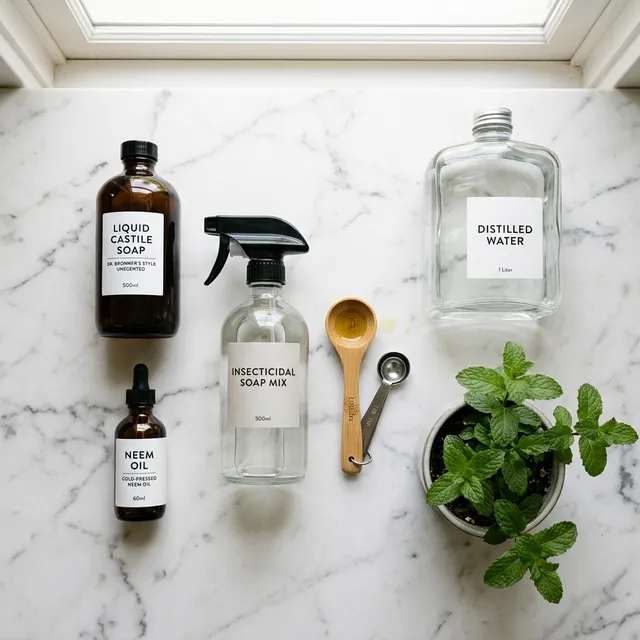
How to Make Insecticidal Soap at Home
Core 3-ingredient method: 1 tablespoon unscented castile per quart, leaf-underside coverage, and the mixing mistakes that burn plants.
 guides
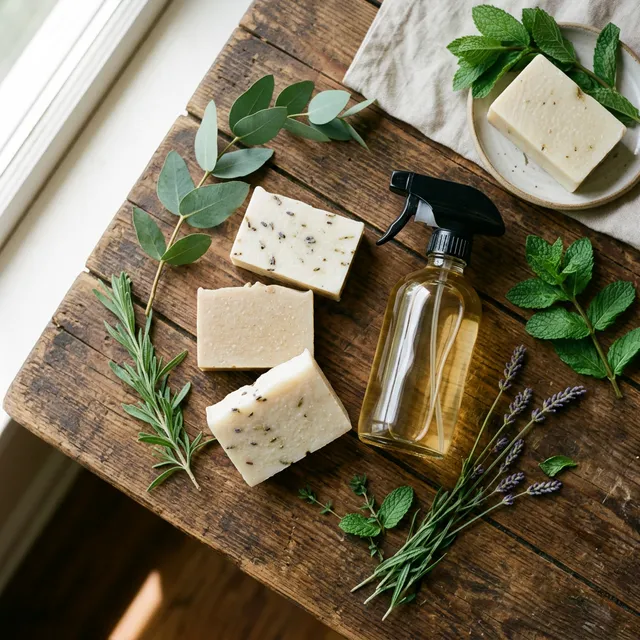
Best Soap for Insecticidal Spray (and What to Avoid)
True castile vs dish detergent: unscented liquid soap at 1 tablespoon per quart. Dawn and “ultra” bottles strip leaf wax.
 guides
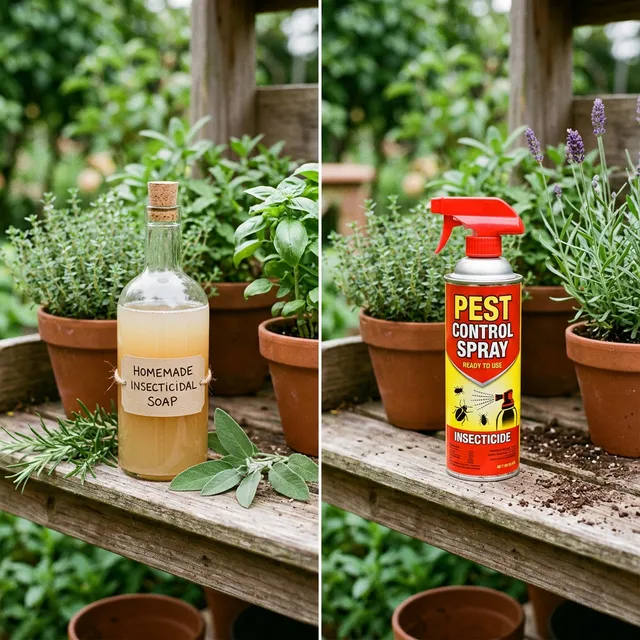
Homemade vs Commercial Insecticidal Soap
Same fatty-acid chemistry, different spend: kitchen castile vs a labeled concentrate. When mixing wins, and when a store bottle is backup.