Insecticidal Soap for Thrips
Garden Soap Team
· 8 min read
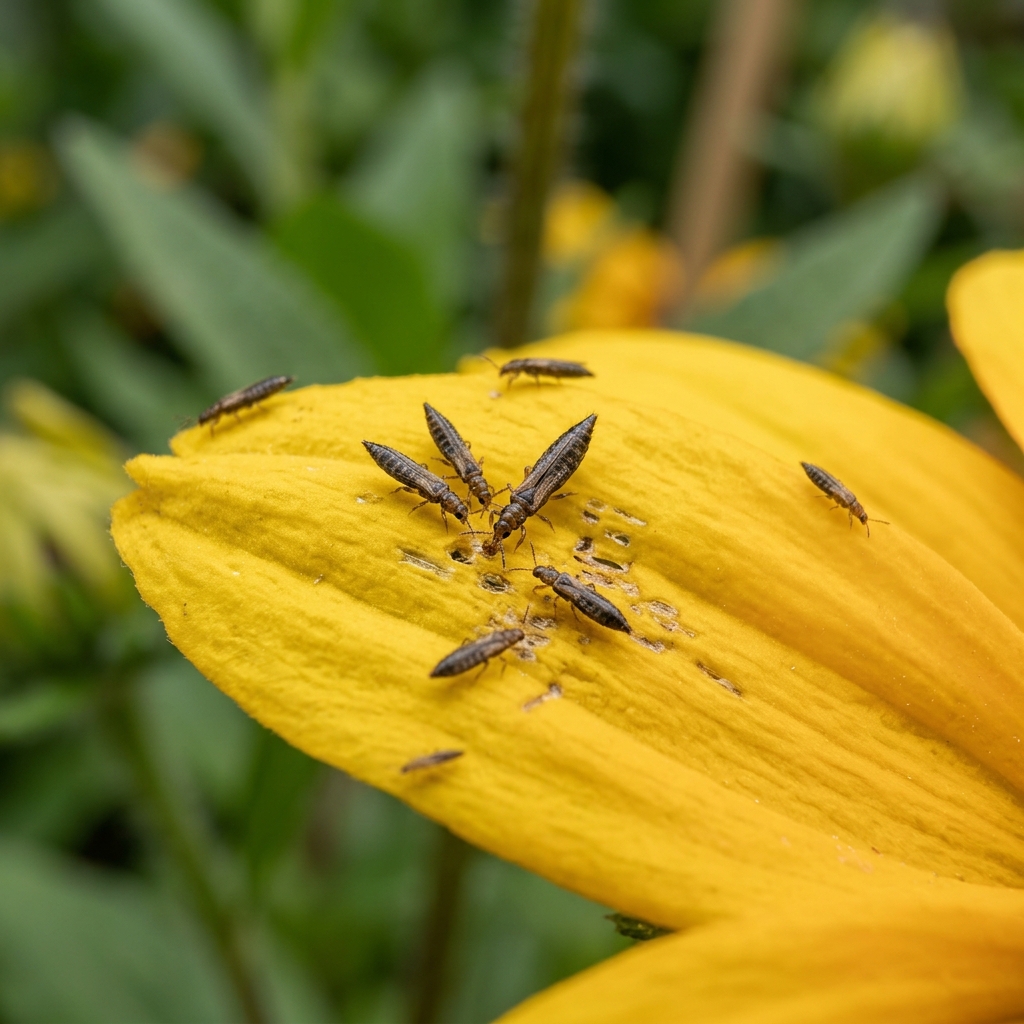
The Garden Soap Team unique angle on thrips is hide + virus, not a peppermint-boosted mix. Soap kills thrips the droplets reach. Eggs sit in leaf tissue. Pupae sit in the top of the soil. Adults hide in buds you cannot open without ruining the flower. And a subset of species move tomato spotted wilt and related viruses that no homemade spray reverses. Generic garden listicles bury that in a pest table. This URL is the contact limit, the 3–5 day adult clock, and when to skip DIY. Core mix steps: how to make insecticidal soap. Index of keepers: guides. Background pages: learn.
Insecticidal soap is still first-line for exposed thrips. Contact is the whole product. If you cannot wet the insect, you do not have a soap job.
Match the pest before you copy a ratio: spider mites stipple and web; mealybugs cotton and honeydew; scale fixed bumps; tomatoes are the crop where TSWV turns a spray day into a pull-the-plant day.
Identifying thrips
The insect: 1–2 mm, slender, fringed wings, pale yellow to dark brown, fast when you breathe on the flower.
The damage:
- Silvery or bronze streaks (not mite stipple-plus-webbing)
- Black specks of frass
- Scarred or brown-edged petals
- Buds that stall or open distorted
Shake test: White paper under a bloom or tip; shake. Thrips arrive as tiny dark streaks that run. Mites are slower specks. Scale does not fall and run.
Mix ratios as research, not a lab claim
Stay in the published fatty-acid window (~1–2%). “1.5 tablespoons per quart” is a research-high starting rate for a hard-to-wet pest — about 1.5% — not a lab-proven thrips LD50. Patch-test. Do not add essential oils as a substitute for coverage.
| Situation | Research starting rate | Notes |
|---|---|---|
| Standard foliar | 1–1.5 tablespoons unscented liquid castile per quart | Distilled or soft water. 1% if the host is tender. |
| Between-pass residual | 1 teaspoon cold-pressed neem + the soap rate, warm water, shake | Combo card: neem oil insecticidal soap. Neem does not kill eggs in tissue. |
| Peppermint “boost” | Skip | A few drops are a scent, not a virus strategy. Skip on edible leaves if you came here from tomatoes. |
Dr. Bronner’s Unscented is the true-soap listing this desk uses in recipes. For traps, use a tagged search so the ASIN cannot rot: blue or yellow sticky traps. Neem: cold-pressed neem oil concentrate.
Research price ranges (snapshot bands, not offers or stars):
- Unscented castile: about $8–18
- Sticky card packs: about $6–14
- Labeled soap RTU: about $7–15
- Predatory mite or Orius shipment: about $20–45
A second RTU does not replace a card you never hung or a symptomatic tomato you left in the row.
How to spray what you can actually wet
- Hang cards first. Blue or yellow sticky traps catch adults that leave the flower when you spray. They are a census, not a cure.
- Bag infested flowers. Heavy populations live in buds. Removing those flowers cuts the fraction soap cannot reach. Treat “30–50%” claims on the open web as marketing; the honest statement is you removed the hiding place.
- Spray folds, undersides, axils, and the top of the mix — thrips pupate in the upper soil. A pretty top-of-leaf mist is a miss.
- Repeat every 3–5 days. Warm-weather egg-to-adult is often about 7–12 days. The interval is for newly emerged adults, not for leftover soap “working.”
| Day | Action |
|---|---|
| 1 | Cards + bag bad flowers + full spray |
| 4 | Second spray |
| 8 | Third spray |
| 12 | Fourth spray |
| 15+ | Scout; spot-treat only if the shake test still moves |
Host notes (including tomatoes)
| Plant | Why this page cares | Do not copy blindly |
|---|---|---|
| Tomatoes | TSWV risk | Symptomatic plants: pull, do not soap |
| Peppers | Same virus family | Same discard rule |
| Roses | Thrips inside buds | Brown petal edges ≠ mites |
| Onions | Onion thrips as a crop pest | Foliar soap is a partial tool |
| Houseplants | Orchids, African violets, dracaena | Isolate; skip oil-heavy mixes on fuzzy leaves |
The virus problem — this is when soap is not the product
Western flower thrips and onion thrips transmit tospoviruses:
- Tomato spotted wilt virus (TSWV) — tomatoes, peppers, lettuce, many ornamentals
- Impatiens necrotic spot virus (INSV) — mostly ornamentals
No homemade or commercial soap reverses those infections. Rings, unexplained wilt, stunt, and irregular mottling plus a thrips find means remove the plant. Leaving it in the bed while you mix castile is how the next tomato gets the virus.
That is the unique commercial honesty Amazon titles skip: the SKU you need may be a trash bag, not another concentrate.
Biological controls (after a knockdown, not instead of ID)
- Amblyseius cucumeris — thrips larvae
- Orius insidiosus — adults and larvae
- Steinernema feltiae — soil pupae
Release after you have dropped the visible adult load, or the predators starve or drown in a weekly soap bath. Do not soap and release on the same afternoon.
When to skip a DIY spray
- Virus symptoms are already on the plant. Pull it. Soap does not un-infect tissue.
- The population lives in tight buds you will not sacrifice. Soap cannot follow them. Bag flowers or skip.
- You were about to raise the rate above ~2% because the last spray “failed.” That failure was a hide, not a weak percentage. See plant safety.
- Shake test is negative and the silvering is old. Do not preventively soap a clean plant in bloom.
- You need soil-stage control only. Foliar DIY does not replace a nematode drench or sanitation of the mix surface.
- The look-alike is mites or scale. Webbing → spider mites. Cotton → mealybugs. Painted-on bumps → scale.
Garden Soap Team desk note
Thrips listings sell “kills on contact” and hide the bud. Garden Soap Team checks — not a test fleet:
- Contact means wet. If the label cannot say residual in honest language, plan cards + repeats.
- True soap. Unscented castile or a potassium-salt concentrate. Tag on this host:
soapgarden06-20only. - Trap color. Thrips pages mention blue and yellow. A random white card is a weaker census.
- Neem type. Cold-pressed vs clarified extract. Notes: best neem oil products and soap vs neem.
- No Product / Offer / AggregateOffer schema. Research price ranges only.
Prevention that is not another bottle: clean soil surface, reflective mulch, skip luxury nitrogen, bag spent blooms, and use IPM basics so soap stays a knockdown, not a weekly ritual on a virus crop.
Frequently Asked Questions
Does insecticidal soap work on thrips? ▼
On thrips you can wet — yes. Eggs in plant tissue and pupae in soil do not take a foliar film. Hideouts inside buds are why listicles that say “soap kills thrips” still fail in bloom.
What's the best way to get rid of thrips? ▼
Remove infested flowers, hang blue or yellow sticky cards, then soap-spray undersides and folds every 3–5 days. Add neem only as a between-pass residual. If tomato spotted wilt symptoms are already on the plant, skip DIY and remove the plant.
Can thrips spread diseases to plants? ▼
Western flower thrips and onion thrips vector tospoviruses, including tomato spotted wilt virus (TSWV) and impatiens necrotic spot virus (INSV). There is no soap cure for those viruses. Early vector control is prevention; a symptomatic plant is a discard.
 ✓
✓ The Garden Soap Team writes every recipe and guide on this site. Formulas follow published horticultural guidance — university extension resources, the UC IPM program, and OMRI standards — and we cross-check concentrations and plant-safety warnings against documented gardener experience before publishing. No harsh chemicals, no guesswork passed off as expertise.
📚 Related Articles
 guides
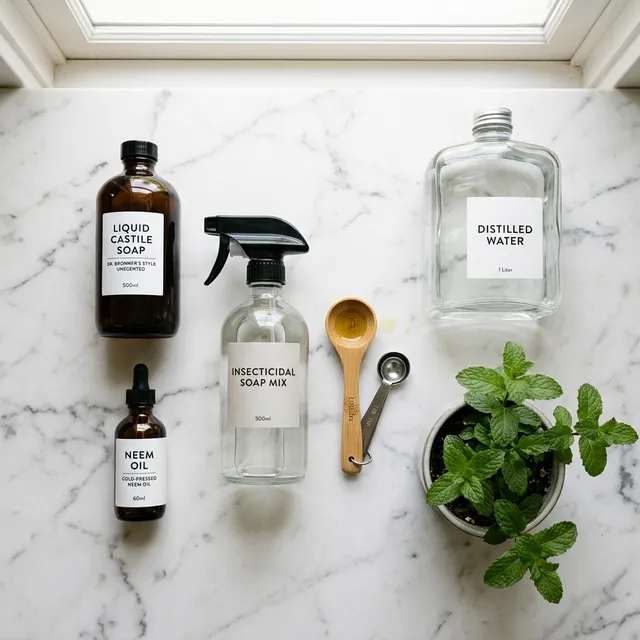
How to Make Insecticidal Soap at Home
Core 3-ingredient method: 1 tablespoon unscented castile per quart, leaf-underside coverage, and the mixing mistakes that burn plants.
 guides
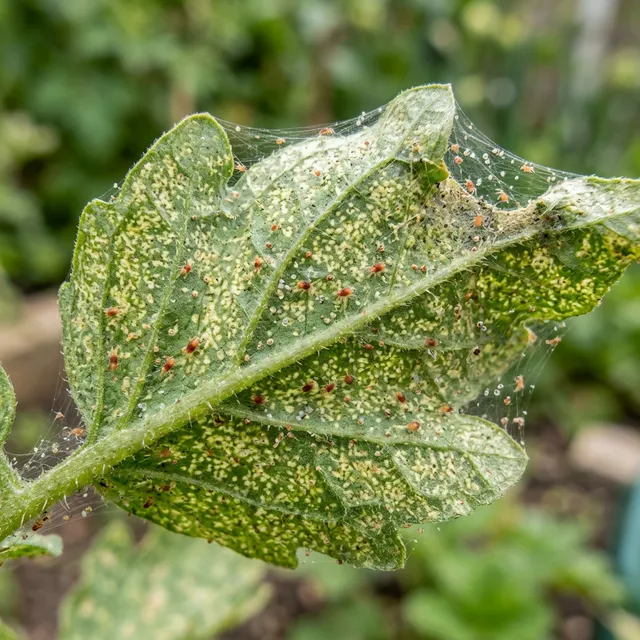
Insecticidal Soap for Spider Mites
Spider mites are tiny, destructive, and multiply fast. Insecticidal soap is your best organic defense. Here's exactly how to use it.
 guides
Insecticidal Soap for Mealybugs
Mealybugs are one of the toughest soft-bodied pests to eliminate. Their waxy coating resists plain water, but insecticidal soap breaks through. Here's how.