Insecticidal Soap for Scale Insects
Garden Soap Team
· 8 min read
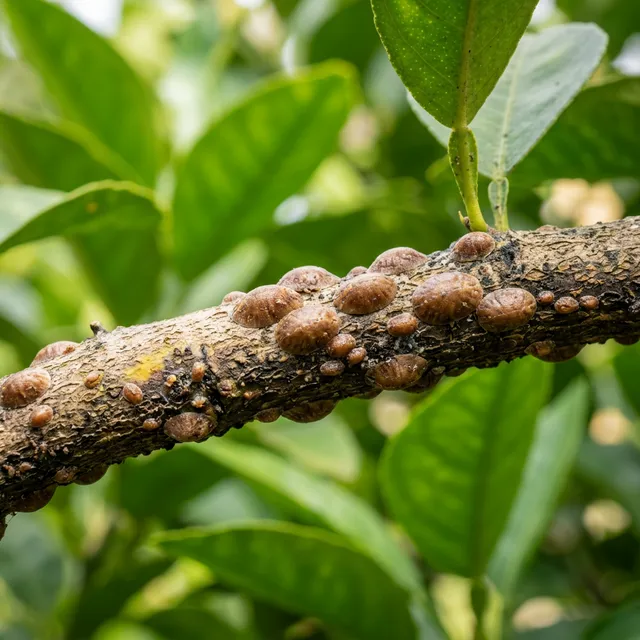
The Garden Soap Team unique angle is soft versus armored, and the crawler day. Scale does not look like a bug. Amazon and generic listicles sell “scale killer” as if one RTU crossed both families. Soft scale is a soap-and-scrape pest. Armored adults are an oil, prune, or wait-for-crawlers pest. Mixing 2% homemade soap onto a crust of oyster-shell scale is how people decide soap “does not work.” The mix itself lives on how to make insecticidal soap. Hubs: guides, learn.
Honeydew without cotton is often this page. Cottony filaments are mealybugs. Moving specks on a paper tap are spider mites. Fast silver streaks are thrips. Greenhouse tomatoes can carry soft scale; they still follow the same crawler rule.
Two families, two jobs
Soft scale
- Sticky honeydew, often sooty mold
- Waxy cover is part of the body
- Larger (about 3–6 mm), more domed
- Soap: useful on crawlers and many settled insects if you saturate
- Brown soft scale, hemispherical scale, wax scale
Armored scale
- No honeydew
- Separate hard shell
- Smaller (about 1–3 mm), flatter
- Soap: crawlers only
- San Jose, oyster shell, euonymus scale
Identifying scale (and not mites)
- Oval or round bumps on stems, veins, undersides
- Brown, tan, white, or gray
- Clusters along main wood
- On citrus: midrib and fruit
Fingernail test: A bump that detaches is scale. Plant tissue is not.
Crawlers: Tiny tan or yellow dots that move for a short window. That is the spray day. Double-sided tape on a twig is a desk census — when specks appear on the tape, spray.
Mix ratios as research, not a lab claim
University soap pages cluster around 1%, with 2% as a common upper bound before burn risk climbs. A 2-tablespoon-per-quart mix is roughly 2% — the top of that research window, not a “stronger scale formula” from a lab. Patch-test. Prefer 1–1.5% on houseplants.
| Target | Research starting rate | Honest limit |
|---|---|---|
| Soft scale, settled + crawlers | 1–1.5 tablespoons unscented castile per quart; optional 1 tablespoon 70% isopropyl | Alcohol is a wax aid, not a shell cracker |
| Armored crawlers only | 1–1.5 tablespoons castile per quart, no alcohol required | Do not raise the rate to punish adults |
| Armored adults | Do not DIY-soap them | Oil, scrape, prune, or wait for crawlers |
Dr. Bronner’s Unscented is the true-soap listing used across these keepers. The alcohol card is rubbing alcohol soap spray. For dormant or summer oil, search rather than freeze a random ASIN: horticultural oil.
Research price ranges (not live offers):
- Unscented castile: about $8–18
- Labeled soap concentrate: about $10–16
- Horticultural oil pint/quart: about $10–22
- Hand lens for crawler scouting: about $8–20
A lens and a calendar beat a third RTU on armored adults.
Scrape, then time the crawler
- Brush or fingernail off visible scale. Dip the brush in the 1% mix.
- Wipe the residue — dead shells still hide crawlers.
- Spray to wet remaining crawlers and soft scale you could not scrape.
- Repeat weekly only while tape or a lens still shows crawlers — not as a monthly superstition.
| Life stage | Typical length | Soap? |
|---|---|---|
| Egg | 1–3 weeks | No — under the cover |
| Crawler | 1–3 days | Yes — this is the page |
| Settled juvenile | 2–6 weeks | Soft: often; armored: fading |
| Adult | months | Soft: if saturated; armored: no |
Most landscape species push crawlers in spring (often April–June in much of North America). Some stack extra generations. Time the tape, not a national date copied from a blog.
Host notes
| Plant | Common type | Desk note |
|---|---|---|
| Citrus | Red scale, brown soft scale | Fruit and midribs; crawler tape on twigs |
| Ficus, palms | Brown soft scale | Isolate; alcohol-soap only after a patch test |
| Fruit wood | San Jose scale | Winter oil + spring crawler soap, not midsummer armored spraying |
| Euonymus | Euonymus scale | Encrusted stems: prune, then crawler timing |
| Orchids | Boisduval scale | Swab precision; skip a coarse hose |
| Greenhouse tomatoes | Soft scale (occasional) | Cool hours; see tomatoes |
When soap is the wrong product
Heavy armored infestations that missed the crawler window:
- Horticultural oil (dormant or summer rate on the oil label)
- Winter dormant oil on woody plants
- Prune out encrusted wood
- Parasitic wasps on a landscape that can keep them
- A labeled systemic as last resort on a specimen — read pollinator language
- Neem as a between-pass residual, not an armored-adult solvent
When to skip a DIY spray
- You have armored adults and no crawlers on tape. Skip soap. Oil, scrape, or wait.
- You were about to mix above 2% because last week’s spray sat on shells. That is burn, not kill. Plant safety.
- The “scale” is cotton. Switch to mealybugs.
- The “scale” runs on paper. Switch to spider mites or thrips.
- The plant is a discard-level houseplant seeding a collection. Same honesty as mealybugs: trash the source.
- Bloom is open and you only have a coarse sprayer. Crawlers need a wet film, not a shower on flowers.
Garden Soap Team desk note
“Scale insect spray” titles collapse two families. Garden Soap Team checks:
- Honeydew or not. Honeydew → soft scale or mealybugs. No honeydew + painted bumps → armored, crawler-only.
- True soap. Unscented castile or potassium-salt concentrate. Host tag:
soapgarden06-20only. - Oil is a different label. Do not call a 2% soap mix “homemade dormant oil.”
- Systemics. Imidacloprid-type houseplant spikes are a last page, not an Amazon default from this desk.
- No Product / Offer / star schema. Ranges above are research.
Inspect nursery wood before it enters the house. Ants farm soft scale the way they farm mealybugs — control the ants or the crawlers return. Monthly lens checks in the growing season beat a calendar spray on empty shells.
Frequently Asked Questions
Does insecticidal soap kill scale? ▼
Soft scale and armored-scale crawlers, yes — if the film wets them. Adult armored scale wears a separate shell soap does not cross. Spraying armored adults because a listing says “scale” is a wasted mix.
How do I know if I have scale on my plants? ▼
Scale looks like brown, tan, or white bumps on stems and veins. Scrape one: a detached bump with a soft body or a wet spot is scale. Bark does not pop off. Honeydew points to soft scale or mealybugs, not armored scale.
What's the difference between soft scale and armored scale? ▼
Soft scale makes honeydew; the wax is part of the body, so soap can work on settled insects. Armored scale makes a detachable shell and no honeydew; soap’s useful window is the crawler, often only a few days per generation.
 ✓
✓ The Garden Soap Team writes every recipe and guide on this site. Formulas follow published horticultural guidance — university extension resources, the UC IPM program, and OMRI standards — and we cross-check concentrations and plant-safety warnings against documented gardener experience before publishing. No harsh chemicals, no guesswork passed off as expertise.
📚 Related Articles
 guides
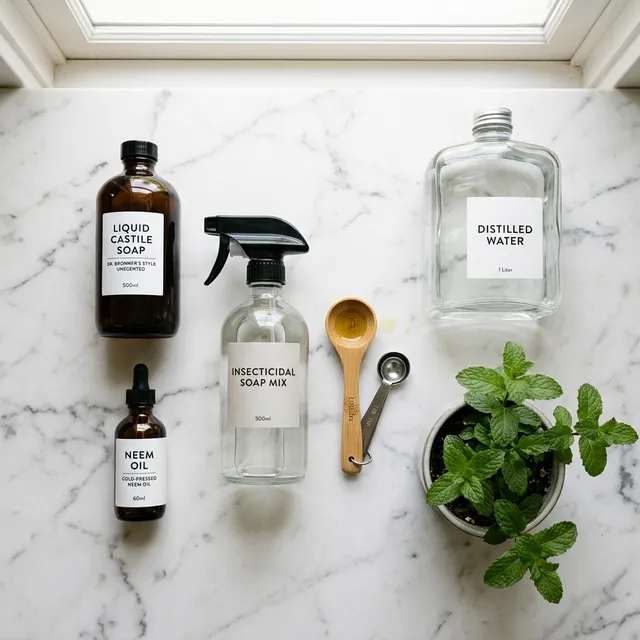
How to Make Insecticidal Soap at Home
Core 3-ingredient method: 1 tablespoon unscented castile per quart, leaf-underside coverage, and the mixing mistakes that burn plants.
 guides
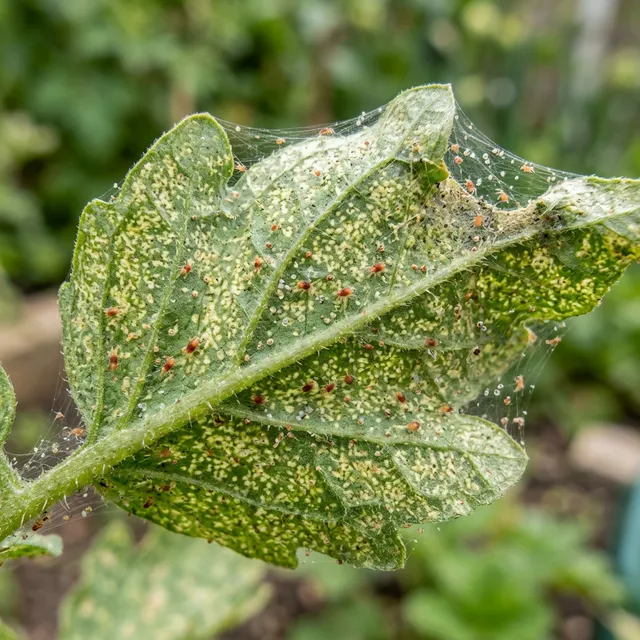
Insecticidal Soap for Spider Mites
Spider mites are tiny, destructive, and multiply fast. Insecticidal soap is your best organic defense. Here's exactly how to use it.
 guides
Insecticidal Soap for Mealybugs
Mealybugs are one of the toughest soft-bodied pests to eliminate. Their waxy coating resists plain water, but insecticidal soap breaks through. Here's how.