Termite Spray vs Insecticidal Soap: What Actually Works
Garden Soap Team
· 8 min read
The Honest Answer First
Someone arriving at a soap site searching “termite spray” wants one of two things: a cheap DIY option, or reassurance before spending money on an exterminator. Here is the honest position of the Garden Soap Team, and it is the same one university extension programs print.
Insecticidal soap does almost nothing to a termite problem. Soap is a contact product. It kills a soft-bodied insect only while the droplet is wet on its body, and it has zero residual activity once dry — the same chemistry we explain in how to make insecticidal soap. Termites fail on both sides of that mechanism: they have a tougher cuticle than an aphid, they live where you cannot spray them (soil, gallery tunnels inside wood), and the colony — the thing that actually matters — is usually underground with a queen you will never reach.
A soap spray that kills twenty workers in a mulch bed is a rounding error to a colony that numbers in the hundreds of thousands. This is not a product weakness. It is the wrong tool, the way a sponge is the wrong tool for a burst pipe.
Why the “Does Soap Kill Termites?” Question Fails
The mechanism matters because it explains the honest answer instead of just asserting it.
- Contact-only kill. University of Connecticut Extension describes insecticidal soaps as working only while wet, with no residual activity after drying. A termite walking over a dried soap film walks away fine.
- Soft-body chemistry. Potassium salts of fatty acids disrupt the cell membranes of soft-bodied insects — aphids, whiteflies, mites, mealybug crawlers. That is why our squash bug guide admits soap struggles even with a hard-shelled garden pest, and why hardened scale and beetle adults shrug it off.
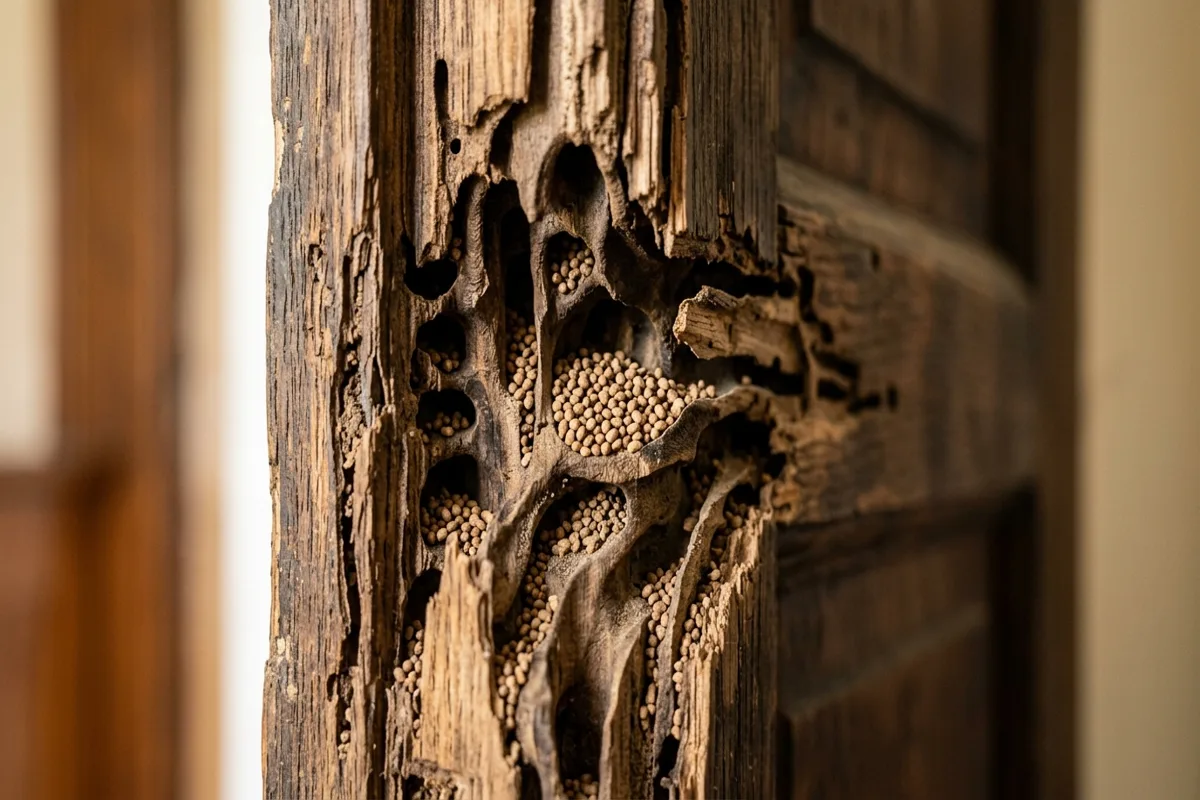
- The colony is elsewhere. Subterranean termite workers commute from a soil nest through mud tubes. Drywood termites live inside the wood they are eating. Either way, the proportion of the colony that is sprayable at any moment is small.
- Swarmers are not the problem. Homeowners often panic when winged swarmers appear and reach for any spray. Swarmers are reproductive advertising; killing them changes nothing about the colony that produced them. Extension sources consistently treat visible swarmers as a reason to inspect, not a target.
What Actually Works for Termites (Extension Consensus)
This is the part where this guide stops being a soap guide. Termite control is structural pest control, and the honest summary of EPA and university extension guidance looks like this:
| Approach | What it is | Who does it |
|---|---|---|
| Liquid soil termiticide barrier | Trenched and injected treatment creating a treated zone around the foundation | Licensed applicator |
| Termite baiting systems | Monitoring stations workers carry slow-acting bait back to the colony | Professional install and monitor |
| Direct wood treatment | Borate or labeled termiticide applied to accessible infested wood | Depends on product label and access |
| Fumigation (drywood termites) | Structural tenting with gas | Licensed structural pest control only |
The US EPA’s consumer guidance on termites is direct: it points homeowners toward professional pest control companies and, for the person doing it themselves, toward checking that any applicator is licensed by the state. UC IPM’s termites page similarly describes subterranean termite control as a matter of soil barriers, bait systems, and reducing conducive conditions — not bottled sprays.
Why professional territory? Three reasons extension sources repeat:
- Product labels. Most effective soil termiticides are restricted-use or labeled for commercial application. The label is the law; if it does not name homeowner use, a homeowner spraying it is off-label.
- Equipment and knowledge. A real barrier treatment means trenching, rodding, and knowing construction type. A miss leaves a gap termites find in a week.
- The goal is the colony. Bait systems work because workers share the bait. That is colony-level logic, not surface-spray logic.
None of this is fear-mongering. Termites are a solvable problem. It is simply a problem whose honest solution sits outside the spray bottle aisle.
When a DIY Spray Is Legitimate
There is a real category where “boring insect + homeowner spray” is sensible, and it is not termites. The distinguishing line is localized, visible borer vs. hidden colony.
Legitimate DIY situations:
- Carpenter bees drilling dime-sized holes in a deck rail or fascia. The gallery is visible, the bee returns to it, and labeled dusts or sprays applied into the hole are a standard homeowner task. Seal and paint the wood afterward.
- Clearwing or flatheaded borers in an individual ornamental tree, caught early, on a labeled product. Colorado State University Extension covers this category as trunk sprays timed to egg-lay for specific borers on specific trees.
- Powderpost beetles in a small, accessible piece of furniture or rough lumber, where borate surface treatments are labeled for that use.
In every legitimate case the target is one gallery in one piece of wood, the timing is known, and the product label names the pest and the site. Compare that to a termite colony under a slab.
Not legitimate:
- Spraying visible mud tubes and calling it treatment. The colony is below and beyond the tube.
- Pouring soap or anything else into wall voids or slab cracks hoping to reach a nest.
- Any “kill the colony with one bottle” premise. That product category is marketed; it is not how colony control works per extension guidance.
Where Soap Legitimately Fits in a Termite-Adjacent World
To keep this page honest about our own product: insecticidal soap is excellent at its job. It is a low-risk contact spray for soft-bodied pests in gardens and on houseplants — the mealybug guide is the classic use case. When gardeners ask us “where does soap fit in my termite situation,” the answer is: it doesn’t, and that is fine.
One adjacent, honest use: soap as an inspection aid, not a treatment. Some gardeners use a soapy water flush to bring soil insects like mole crickets or sod webworm larvae to the surface for counting. If you want to confirm what is crawling in a suspect mulch bed before paying for an inspection, drenching a small patch with soapy water is a diagnostic, not a control. What surfaces, surfaces; what stays below was never yours to reach anyway.
If the pests you can see in the garden are aphids, mites, or whiteflies rather than wood-destroying insects, the soap decision tree is on best organic pesticides for vegetable gardens.
The Realistic Decision Path
- You see swarmers or mud tubes. Do not spray. Look for the moisture and wood-to-soil conditions extension sources name: mulch piled on siding, firewood against the house, grading that drains toward the foundation, leaky outdoor spigots. Fixing those is real prevention and costs nothing.
- You suspect activity near the structure. Get an inspection. Many are free or cheap; per EPA guidance, check the company is licensed in your state.
- You confirm termites in the structure. This is the licensed-applicator conversation: barrier, bait, or wood treatment depending on species and construction. Get more than one bid; treatment scopes vary.
- You only see garden-level activity (stumps, landscape timbers away from the house). Monitor it. Replace decaying wood in beds. This is judgment territory, and an inspection is still cheaper than being wrong.
What Not to Buy
The “termite spray” retail shelf has an honesty problem. Foam and jet sprays labeled for termites do have legitimate uses — licensed applicators use labeled foams for spot treatments in wall voids. But a homeowner buying a retail can to “treat” a colony is usually buying a way to feel active while the colony continues. If a product’s marketing implies colony elimination from a hand spray, read the label instead of the box front: the label will describe spot or localized use, in smaller words, because that is what the chemistry supports.
We do not sell termite products on this site, and we are not going to point you at a spray that repeats the honest mistake. The most valuable thing a soap site can say about termite spray is the truthful thing: the tool that matches this pest is professional treatment, and the free part of termite control is fixing the conditions that invited them.
Frequently Asked Questions
Will vinegar or essential oils kill termites?
Vinegar and orange-oil mixtures kill termites on direct contact in the same limited way soap does — the ones you can soak, and no others. Orange oil (d-limonene) has some documented spot-treatment use against drywood termites in accessible wood, but university extension sources describe whole-structure treatment as the reliable route. None of these reach a subterranean colony.
Are the winged termites in my window sill an emergency?
They are a signal. Swarmers indoors strongly suggest a colony nearby, sometimes in the structure. The calm response is an inspection within days, not same-day spraying. The swarmers themselves are not eating your house.
How much does professional termite treatment cost?
Costs vary widely by region, home size, construction, and treatment type — commonly from several hundred dollars for localized work to a couple of thousand for full perimeter soil treatments, with ongoing bait monitoring priced yearly. Get itemized bids from licensed firms rather than averages from the internet, including this one.
Does diatomaceous earth control termites?
Diatomaceous earth is a desiccant dust that can kill insects that contact it in dry, exposed locations. Termites need the humidity of their galleries and soil, which is exactly where DE does not stay dry or accessible. Extension guidance does not present DE as termite control. See it the same way as soap: capable product, wrong pest.
Frequently Asked Questions
Does insecticidal soap kill termites? ▼
Only on direct contact, and only the individual termite you actually hit. Insecticidal soap is a contact product for soft-bodied pests like aphids and mites; it has no residual activity and does not reach the colony, which is usually underground or inside wood. Extension guidance treats termite control as a structural job for soil treatments or baiting systems, not a foliar spray.
What actually kills a termite colony? ▼
According to EPA and university extension guidance, colony control comes from liquid soil termiticides applied as a barrier, termite baiting systems, or direct wood treatments. These are professional territory because they require specialized equipment, product labels restricted to licensed applicators, and knowledge of colony location. A homeowner spray cannot reach the queen.
When is a DIY spray legitimate for wood-boring insects? ▼
For localized, visible borers such as carpenter bee holes in a deck rail or clearwing borer larvae in an individual ornamental tree, targeted sprays or injections into the gallery can be legitimate if the product label names that pest and site. Colony-forming structural termites are a different category entirely.
Can I spray soapy water on termites I see in mulch or a stump? ▼
Soapy water will kill the workers you thoroughly wet in that moment, and that is where it ends. The workers you can see are a fraction of the colony. If those termites are near your foundation, the honest next step is a professional inspection, not a heavier soap mix.
 ✓
✓ The Garden Soap Team writes every recipe and guide on this site. Formulas follow published horticultural guidance — university extension resources, the UC IPM program, and OMRI standards — and we cross-check concentrations and plant-safety warnings against documented gardener experience before publishing. No harsh chemicals, no guesswork passed off as expertise.
📚 Related Articles
 guides
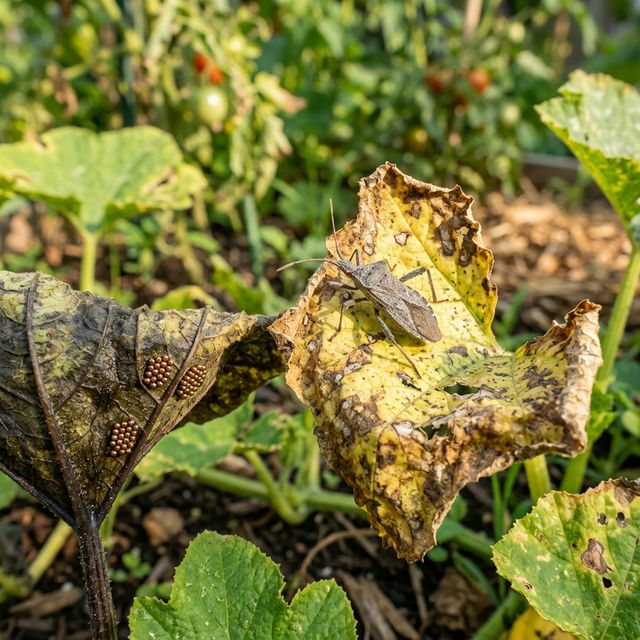
Insecticidal Soap for Squash Bugs
Squash bugs destroy zucchini, pumpkins, and summer squash fast. Learn whether insecticidal soap works on them and the best organic strategy to protect your cucurbits.
 guides
Insecticidal Soap for Mealybugs
Mealybugs are one of the toughest soft-bodied pests to eliminate. Their waxy coating resists plain water, but insecticidal soap breaks through. Here's how.
 guides
Best Organic Pesticides for Vegetable Gardens
Start with 1% castile for soft-bodied pests. Buy Bt for caterpillars and spinosad for beetles — not another RTU soap for the same aphids.