Insecticidal Soap for Squash Bugs
Garden Soap Team
· 8 min read
The Squash Bug Problem
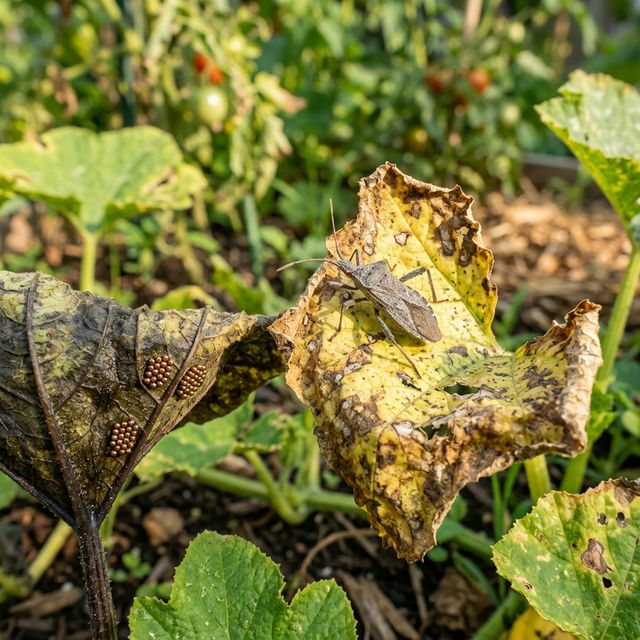
If you grow zucchini, pumpkins, butternut squash, or any other cucurbit, you already know squash bugs. They’re the flat, gray-brown, shield-shaped insects that seem to appear out of nowhere and can kill a healthy plant in a matter of days.
Squash bugs (Anasa tristis) feed by piercing plant tissue and sucking sap, injecting toxic saliva that causes leaves to wilt, turn black, and die. A heavy infestation can take down an entire squash plant before you ever harvest a single fruit. Worse, they carry a bacterial disease called cucurbit yellow vine decline that can kill plants even faster than the feeding damage.
The natural question is whether insecticidal soap can solve this problem. The honest answer is: partially. Let me explain why and give you the complete strategy.
Why Insecticidal Soap Only Partly Works
Insecticidal soap kills soft-bodied insects by dissolving their protective cuticle on direct contact. That’s why it’s devastating against aphids and whiteflies, which have thin, vulnerable membranes.
Adult squash bugs are a different story. Their thick, hardened exoskeleton acts as armor against the fatty acid salts in soap spray. You can drench an adult squash bug in insecticidal soap and watch it walk away.
However, squash bug nymphs are a completely different target:
| Life Stage | Vulnerability to Soap | Why |
|---|---|---|
| Eggs (copper-colored clusters) | None | Hard shell protects embryo |
| First-instar nymphs | High | Soft, pale green, no armor |
| Second/third-instar nymphs | Moderate | Developing but still soft |
| Late-instar nymphs | Low | Darkening exoskeleton |
| Adults | Very low | Fully hardened shield |
The window of opportunity is narrow. You need to hit nymphs within the first 1-2 weeks after hatching, before their exoskeleton hardens.
Identifying Squash Bugs at Every Stage
Knowing what to look for is half the battle:
Eggs:
- Shiny, copper or bronze colored, oval-shaped
- Laid in neat clusters of 15-20 on leaf undersides
- Usually placed along leaf veins where they’re less visible
- Hatch in 7-14 days depending on temperature
Nymphs:
- Pale green to light gray when newly hatched
- Cluster together near egg sites
- Gradually darken and develop the adult shield shape over 4-6 weeks
- Move faster than you’d expect for their size
Adults:
- 5/8 inch long, flat, gray-brown, shield-shaped
- Emit a foul smell when crushed (similar to stink bugs)
- Fly well and can quickly colonize new plants
- Overwinter in garden debris and emerge in spring
The Best Insecticidal Soap Approach for Squash Bugs
Since soap only works on nymphs, timing and thoroughness are everything.
Recipe
Use the standard castile soap spray at a slightly stronger concentration:
- 2 tablespoons pure liquid castile soap per quart of water
- Add 1 teaspoon vegetable oil for better adhesion to waxy squash leaves
- Optional: add 1 teaspoon neem oil for residual anti-feeding effect
The stronger concentration is important because squash leaves are thick and waxy, and nymphs tend to hide in leaf folds and at the base of stems where spray coverage is difficult.
Spray Technique
- Scout first. Check leaf undersides for egg clusters. Mark infested leaves with a twist tie so you can find them after mixing your spray.
- Target nymph clusters. Newly hatched nymphs stay grouped near their egg site for the first few days. One well-aimed spray pass can eliminate dozens.
- Spray the crown. Squash bugs concentrate where stems meet the soil line. Spray this area thoroughly, including the soil surface immediately around the stem.
- Flip leaves aggressively. Squash leaves are large and heavy. You need to physically lift them and spray the underside, not just mist from above.
- Spray early morning. Nymphs cluster together overnight and are sluggish in cool morning temperatures. By midday, they’ve dispersed across the plant.
Application Schedule
| Application | Timing | Focus |
|---|---|---|
| First spray | When first nymphs appear | Kill initial hatch |
| Second spray | 3-4 days later | Catch stragglers and late hatchers |
| Third spray | 3-4 days later | Break up remaining clusters |
| Fourth spray | 5-7 days later | Catch second wave of eggs hatching |
| Ongoing | Spot-treat as needed | Monitor and respond to new nymphs |
The Complete Organic Squash Bug Strategy
Insecticidal soap is one tool in a multi-pronged approach. Here’s the full organic strategy that actually works:
1. Daily Egg Removal
Check leaf undersides every morning. When you find egg clusters, you have three options:
- Scrape them off with a butter knife onto a piece of duct tape (sticky side up)
- Remove the leaf section if the plant can afford to lose it
- Crush them between your fingers (wear gloves)
This single practice, done consistently, reduces squash bug populations more than any spray.
2. Hand-Pick Adults
Adult squash bugs hide under leaves, in leaf litter, and at the base of plants. Every adult you remove is hundreds of potential offspring eliminated. Drop them into a bucket of soapy water to kill them.
The best time for hand-picking is early morning when adults are still sluggish and clustered together.
3. Trap Boards
Lay a flat board or piece of cardboard on the ground next to your squash plants in the evening. Squash bugs crawl underneath to shelter overnight. In the morning, flip the board and destroy everything hiding there.
This technique is surprisingly effective. I’ve collected 20-30 adults from a single board in heavily infested gardens.
4. Insecticidal Soap for Nymphs
Apply your soap spray as described above, targeting the vulnerable nymph stage.
5. Diatomaceous Earth
Sprinkle food-grade diatomaceous earth around the base of squash plants and on the soil surface. The microscopic sharp particles damage the exoskeleton of crawling insects, including adult squash bugs. Reapply after rain or irrigation.
6. Row Covers (Prevention)
Cover young squash plants with floating row covers from transplanting until flowering begins. This physically excludes adult squash bugs. Remove covers when flowers appear so pollinators can access them, or hand-pollinate.
Companion Planting That Helps
Several plants deter squash bugs when grown alongside cucurbits:
- Nasturtiums act as a trap crop, attracting squash bugs away from your main plants
- Catnip contains nepetalactone, a natural insect repellent
- Tansy deters multiple squash pests (but keep it contained, it’s invasive)
- Radishes interplanted with squash may reduce squash bug feeding
- Marigolds (French varieties) provide general pest confusion
For more on using plants that repel bugs, see our companion planting guide.
Common Mistakes That Make Squash Bugs Worse
Spraying adults and expecting results. Save your soap spray for nymphs. Hand-pick adults instead.
Waiting too long to start. By the time you see wilting leaves, the population is already large. Scout proactively from the day you transplant.
Leaving garden debris over winter. Squash bugs overwinter as adults in dead plant material, leaf litter, and under boards. Clean up cucurbit debris thoroughly in fall.
Growing squash in the same spot every year. Rotate your cucurbit planting location annually. Squash bugs emerge in spring right where last year’s squash grew.
Only using one method. No single organic approach controls squash bugs. You need the combination of egg removal, hand-picking, soap spray on nymphs, and cultural practices working together.
Resistant Varieties
Some squash varieties tolerate squash bug pressure better than others:
- Butternut squash is more resistant than summer squash varieties
- Tromboncino (an Italian heirloom) shows natural resistance
- Royal Acorn tolerates moderate pressure
- Zucchini and yellow crookneck are the most susceptible, requiring the most vigilant management
Choosing resistant varieties doesn’t eliminate the problem, but it buys you time and reduces the threshold where damage becomes devastating.
When to Escalate Beyond Soap
If your organic approach isn’t keeping up with a severe infestation:
- Add neem oil to your spray mix for anti-feeding and growth-disrupting effects
- Try spinosad, an organic-approved insecticide derived from soil bacteria that’s effective against squash bug nymphs
- Consider pyrethrin (not permethrin) as a short-lived organic knockdown treatment for severe outbreaks
- Review your integrated pest management strategy for systemic improvements
Prevention for Next Season
The best time to fight squash bugs is before they arrive:
- Clean up all cucurbit debris immediately after harvest
- Till the soil in late fall to expose overwintering adults to cold
- Start plants indoors to get them established before squash bugs emerge
- Use row covers from day one
- Rotate planting locations at least 50 feet from last year’s cucurbit patch
- Plant early varieties that produce before peak squash bug season
Frequently Asked Questions
Does insecticidal soap kill squash bugs? ▼
Insecticidal soap kills squash bug nymphs effectively but has limited effect on adults. Adult squash bugs have a hard, shield-shaped exoskeleton that resists the soap's contact-kill mechanism. Target the nymphs early in the season for best results.
When should I spray insecticidal soap for squash bugs? ▼
Spray as soon as you see nymphs hatching, usually in late spring or early summer. Check leaf undersides daily starting when your squash plants begin to vine. Early morning is the best spray time because nymphs cluster together overnight.
How many times should I spray for squash bugs? ▼
Spray every 3-5 days for at least 4 applications during the nymph hatching period. Since eggs hatch in waves over 1-2 weeks, a single application won't catch them all. Continue monitoring and spot-treating throughout the growing season.
What kills squash bugs organically? ▼
A combination approach works best: insecticidal soap for nymphs, hand-picking adults and eggs, diatomaceous earth around plant bases, and trap boards placed overnight near plants. No single organic method eliminates squash bugs alone.
 ✓
✓ The Garden Soap Team writes every recipe and guide on this site. Formulas follow published horticultural guidance — university extension resources, the UC IPM program, and OMRI standards — and we cross-check concentrations and plant-safety warnings against documented gardener experience before publishing. No harsh chemicals, no guesswork passed off as expertise.
📚 Related Articles
 guides
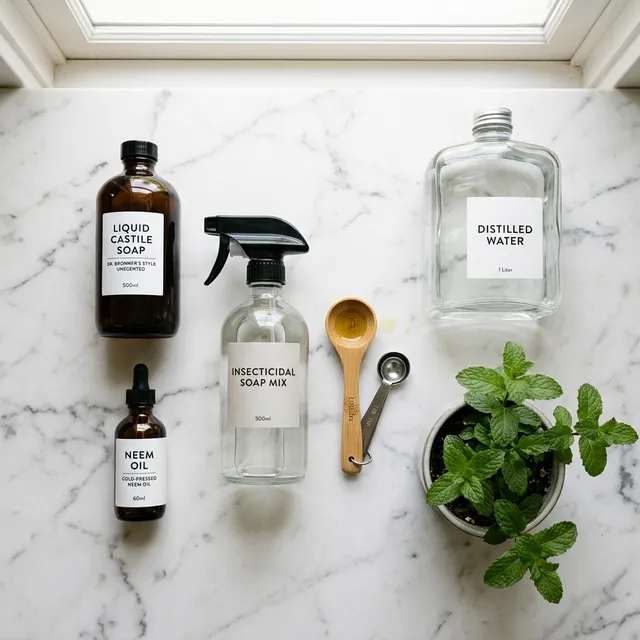
How to Make Insecticidal Soap at Home
Core 3-ingredient method: 1 tablespoon unscented castile per quart, leaf-underside coverage, and the mixing mistakes that burn plants.
 guides
When to Spray Insecticidal Soap for Best Results
Timing is everything with insecticidal soap. Learn the best time of day, season, and growth stage to spray for maximum pest control.
 guides
Natural Pesticides for Vegetable Gardens
Six extension-guided tools for edible beds: contact soap first, then neem, Bt, and companions. Ranked by pest — not by the loudest organic label.