Neem Oil Spray Recipe for Plants
Cold-pressed neem plus castile as emulsifier: evening spray, 48-hour patch test, and why “neem extract” listings lack azadirachtin.
Why Neem Oil Works on So Many Plant Problems
Neem oil is pressed from the seeds of the neem tree (Azadirachta indica), native to India and Southeast Asia. The active compound, azadirachtin, doesn’t just kill insects on contact. It disrupts feeding, prevents molting, and blocks reproduction in over 200 insect species. That’s a wider reach than most synthetic pesticides, with none of the toxic residue.
But here’s what makes neem genuinely useful for home gardeners: it also fights fungal diseases. Powdery mildew, black spot, rust, and leaf spot all respond to neem oil applications. One spray handles two categories of problems. That kind of efficiency matters when you’re managing a backyard garden on weekends.
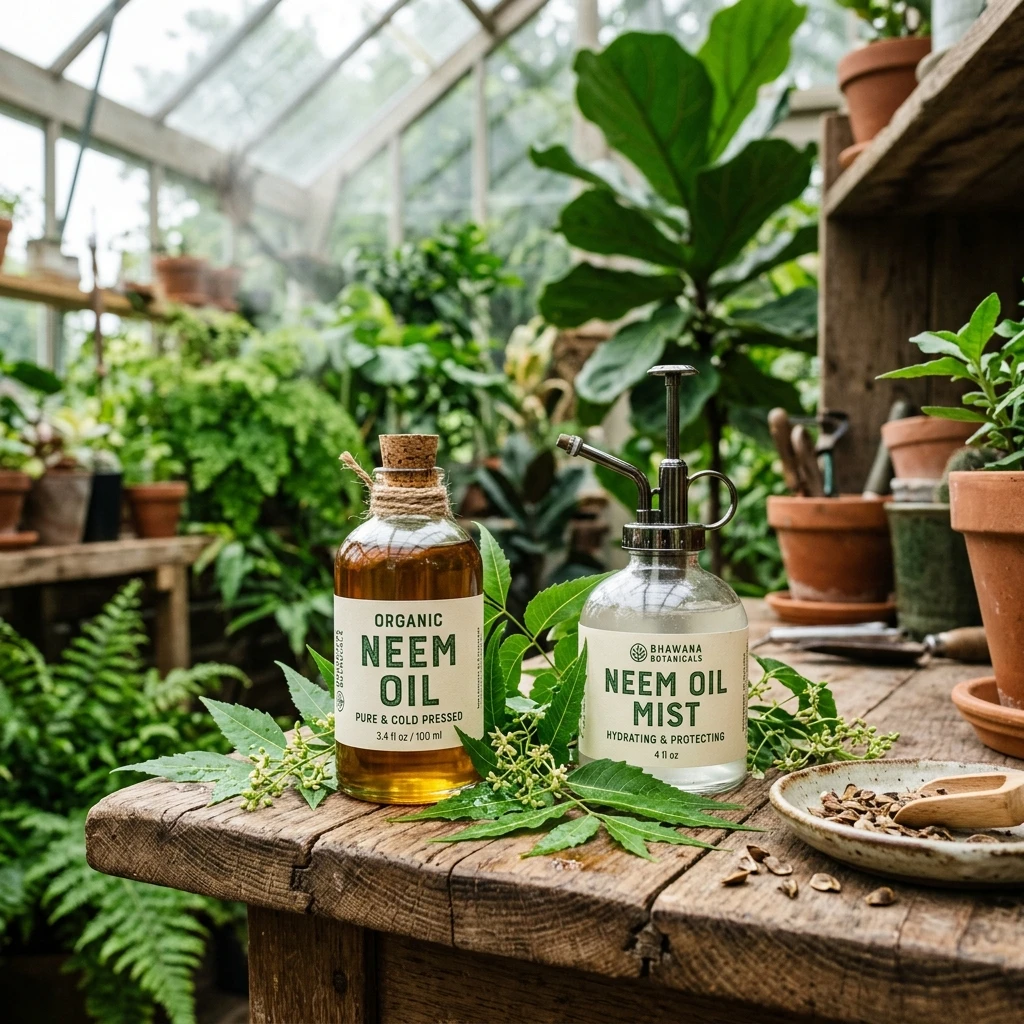
The key distinction is between cold-pressed neem oil and clarified hydrophobic extract. Cold-pressed (sometimes labeled “raw” or “crude”) retains the azadirachtin that does the heavy lifting against pests. Clarified extract has the azadirachtin removed, leaving only the fatty acids. Both have some insecticidal properties, but cold-pressed is what you want for serious pest and disease control.
Choosing the Right Neem Oil
Not all neem oil is the same. For pest control, you need cold-pressed, 100% pure neem oil. Here’s what to look for on the label:
- Cold-pressed or raw — confirms azadirachtin is intact
- 100% neem oil — no fillers or carrier oils
- OMRI listed — certified for organic gardening
- Dark bottle — neem degrades in light
The Garden Soap Team reads the label for cold-pressed (azadirachtin intact), not the review count. Harris Cold-Pressed Neem Oil and Neem Bliss Pure Neem Oil are the two concentrates this recipe assumes. Brand-by-brand notes live on best neem oil products for gardens.
Avoid anything labeled “neem oil extract” or “clarified hydrophobic extract of neem oil” for pest control purposes. These products work as horticultural oils (smothering insects), but lack the systemic pest-fighting power of cold-pressed neem.
The Recipe: Standard Neem Oil Spray
This is the all-purpose formula that works on vegetables, houseplants, ornamentals, fruit trees, and herbs.
Ingredients
- 1 quart warm water (70-80°F)
- 1 tablespoon pure liquid castile soap (Dr. Bronner’s Unscented works best)
- 2 teaspoons cold-pressed neem oil
- Optional: 5 drops peppermint essential oil for extra repellent power
Mixing Instructions
Step 1: Warm your water. Cold water causes neem oil to clump and refuse to emulsify. Aim for roughly the temperature of warm tap water, not hot.
Step 2: In a small cup or bowl, combine the castile soap and neem oil. Stir briskly until they form a uniform milky liquid. This pre-mixing step is the difference between a spray that works and one that separates in the bottle.
Step 3: Pour the soap-neem mixture into your spray bottle or pump sprayer. Add the warm water. Shake vigorously for 30 seconds.
Step 4: If using peppermint oil, add it now and shake again. The peppermint adds minor repellent benefit and helps mask neem’s distinctive smell.
Step 5: Use within 8 hours. Diluted neem oil breaks down rapidly. Mixing a batch to store for next week is a waste of product.
Concentration Adjustments
| Purpose | Neem Oil per Quart | Notes |
|---|---|---|
| Preventive maintenance | 1 teaspoon | Every 14 days during growing season |
| Light infestation | 2 teaspoons | Standard recipe, every 7 days |
| Heavy infestation | 1 tablespoon | Every 5 days, watch for leaf burn |
| Fungal disease | 2 teaspoons | Weekly until symptoms clear |
| Soil drench (fungus gnats) | 1 teaspoon | Water into soil, skip the foliar spray |
For heavy infestations, you can bump up to 1 tablespoon per quart, but test on a few leaves first. Some plants react badly to higher concentrations, especially in warm weather.
How to Apply Neem Oil Spray
Timing Is Everything
Spray in the early morning (6-9 AM) or late evening (after 6 PM). Neem oil and sunlight don’t mix well. UV light degrades the azadirachtin, and the oil can act as a magnifier that burns leaf tissue in direct sun. The same principle applies to insecticidal soap timing.
Never spray when temperatures exceed 85°F. Heat-stressed plants are far more susceptible to phytotoxicity from any spray, neem included.
Application Technique
- Shake the bottle every 30 seconds while spraying. Neem separates constantly, and unshaken sprays deliver uneven concentrations.
- Cover all surfaces. Tops of leaves, undersides, stems, and branch crotches. Pests hide where you don’t look.
- Spray until dripping. Light misting won’t achieve the coverage needed for systemic absorption.
- Don’t forget the soil line. For fungus gnats and soil-dwelling larvae, spray the soil surface or water in a diluted neem solution.
Application Schedule
| Week | Action | Purpose |
|---|---|---|
| 1 | Full spray, Day 1 and Day 5 | Knock down active infestation |
| 2 | Full spray, Day 10 | Catch newly hatched nymphs |
| 3 | Assessment spray if needed | Break reproduction cycle |
| Ongoing | Every 14 days | Preventive maintenance |
For fungal issues like powdery mildew, spray weekly until you see clean new growth forming. Then drop to biweekly preventive applications.
Which Plants Love Neem Oil (and Which Don’t)
Great Candidates
- Tomatoes — handles hornworms, aphids, and early blight
- Roses — controls aphids, black spot, and powdery mildew
- Peppers — repels aphids and flea beetles
- Cucumbers and squash — fights squash bugs and powdery mildew
- Fruit trees — manages scale, mites, and fungal diseases
- Most houseplants — safe for pothos, philodendrons, monsteras, fiddle leaf figs
Use Caution With
Some plants are sensitive to oil-based sprays, and neem can cause leaf damage on:
- Ferns — delicate fronds burn easily
- Calatheas and marantas — sensitive to any foliar spray
- Succulents and cacti — the oil can clog their specialized pores
- Fresh transplants — wait 2 weeks after transplanting before spraying
- Seedlings under 4 weeks old — too fragile for oil-based sprays
When in doubt, spray one or two leaves and wait 48 hours. If no discoloration, spotting, or wilting appears, proceed with the full plant.
Neem Oil as a Fungicide
This is neem’s underrated strength. While most gardeners reach for neem to fight bugs, it’s equally valuable against common fungal problems:
Powdery mildew: That white powdery coating on squash, cucumber, and rose leaves. Neem disrupts fungal cell growth and prevents spore germination. Spray at the first sign of white patches.
Black spot: The bane of rose growers. Weekly neem applications during humid weather prevent the black-spotted leaf drop that plagues untreated bushes.
Rust: Orange or brown pustules on leaf undersides. Neem slows the spread and prevents new infection when applied preventively.
Leaf spot: Various bacterial and fungal leaf spots respond to neem’s antifungal properties. It won’t cure advanced infections, but early treatment and prevention are effective.
For fungal control specifically, the basic castile soap spray won’t help. You need the neem oil component. The soap just helps the neem emulsify and provides some contact insecticidal benefit as a bonus.
Neem Oil for Houseplants
Indoor plants face a smaller pest roster, but the common ones (fungus gnats, mealybugs, spider mites, scale) are persistent. Neem oil is one of the best indoor options because the systemic protection keeps working between spray sessions.
For houseplants, use the lower concentration: 1 teaspoon neem oil per quart. Indoor plants get less air circulation, so excess oil lingers on leaves longer and increases burn risk.
Fungus gnat soil drench: Mix 1 teaspoon neem oil and 1 teaspoon castile soap into a quart of water. Water the soil thoroughly. The azadirachtin disrupts larval development in the growing medium. Repeat every 7-10 days for three cycles.
Storing Neem Oil
Pure, undiluted neem oil lasts 1-2 years when stored properly:
- Keep in a cool, dark place (pantry or cabinet, not windowsill)
- Neem solidifies below 65°F — this is normal and doesn’t mean it’s gone bad
- To re-liquify, run the bottle under warm tap water for 2-3 minutes
- Never microwave neem oil
- Once diluted into spray, use within 8 hours
If your neem oil smells rancid (sour rather than its usual garlicky-sulfur scent), it’s oxidized and should be replaced. Fresh neem smells strong but not spoiled.
Common Mistakes to Avoid
Spraying in midday sun. This is the number one cause of neem-related plant damage. The oil heats up on leaf surfaces and literally cooks the tissue beneath it. Morning or evening only.
Skipping the soap. Without an emulsifier, neem oil floats on water in blobs. You’ll spray pure water on some leaves and concentrated oil on others. Castile soap is non-negotiable.
Mixing too far in advance. Azadirachtin starts degrading the moment it’s diluted. A batch mixed yesterday is significantly less effective than a fresh batch today.
Expecting instant results. Neem isn’t a contact killer like insecticidal soap. It works systemically over days. Insects that feed on treated plants stop eating, stop molting, and stop reproducing, but they don’t drop dead in minutes. Give it 3-5 days to see population decline.
Using the wrong neem product. “Rose and flower neem oil spray” or “ready-to-use neem” from the hardware store often contains clarified extract with minimal azadirachtin. Read the label. You want cold-pressed, pure neem oil and you mix it yourself.
Neem Oil vs. Insecticidal Soap: When to Use Each
If you’re wondering whether you need neem oil or insecticidal soap, here’s the quick guide:
- Active infestation, need them dead today — insecticidal soap
- Want protection that lasts between sprays — neem oil
- Fungal disease on top of pest problems — neem oil
- Sensitive plants near harvest — insecticidal soap (zero residue)
- Best of both worlds — combine them in our neem oil insecticidal soap recipe
Most gardeners keep both on hand and alternate based on what the bed needs that week. Mechanism comparison: insecticidal soap vs neem oil. Combined tank mix: neem oil insecticidal soap spray.
Listing checks before you buy
A “neem oil spray” title does not tell you if azadirachtin is still in the bottle.
- Cold-pressed vs extract: Buy cold-pressed / raw 100% neem. Skip “clarified hydrophobic extract” and hardware-store RTU if you want residual feeding disruption. The ranked bottles are on best neem oil products for gardens.
- Soap is the emulsifier: Without unscented castile, oil floats and you spray blotches. This is not a second pesticide — it is how the mix stays mixed.
- Plant sensitivity: Evening only. Skip above ~85°F, wilted plants, and hairy or waxy foliage until a 48-hour patch test. Oil plus heat burns.
- When plain soap is enough: Contact knockdown of a small aphid colony is still the basic castile recipe. Add neem when pests return between sprays or mildew is in the same bed.
 ✓
✓ The Garden Soap Team writes every recipe and guide on this site. Formulas follow published horticultural guidance — university extension resources, the UC IPM program, and OMRI standards — and we cross-check concentrations and plant-safety warnings against documented gardener experience before publishing. No harsh chemicals, no guesswork passed off as expertise.
📚 Related Articles
 recipes
Neem Oil Insecticidal Soap Spray
Soap knocks pests down; neem adds a few days of feeding disruption. Mix ratios, evening timing, and when plain castile is still enough.
learnInsecticidal Soap vs Neem Oil
Insecticidal soap vs neem oil — which is better for your garden? Compare how they work, what pests they kill, and when to use each one (or both together).
guidesBest Neem Oil Products for Gardens: Complete Buyer's Guide
Buy cold-pressed neem for residual or mildew help — not as the first bottle for a small aphid colony. Check azadirachtin, not the listing title.