Essential Oils That Repel Garden Pests
Garden Soap Team
· 8 min read
Separating Hype from Science
Essential oils have a marketing problem: they’re sold as miracle solutions for everything from headaches to home security. In the garden pest control space, the claims range from legitimate to laughable. Some essential oils have genuine, research-backed insecticidal and repellent properties. Others are wishful thinking in a pretty bottle.
This guide covers only the essential oils with peer-reviewed research supporting their use against garden pests. If an oil isn’t on this list, it either hasn’t been studied enough or failed to show meaningful pest control results in controlled trials.
The Top Essential Oils for Pest Control
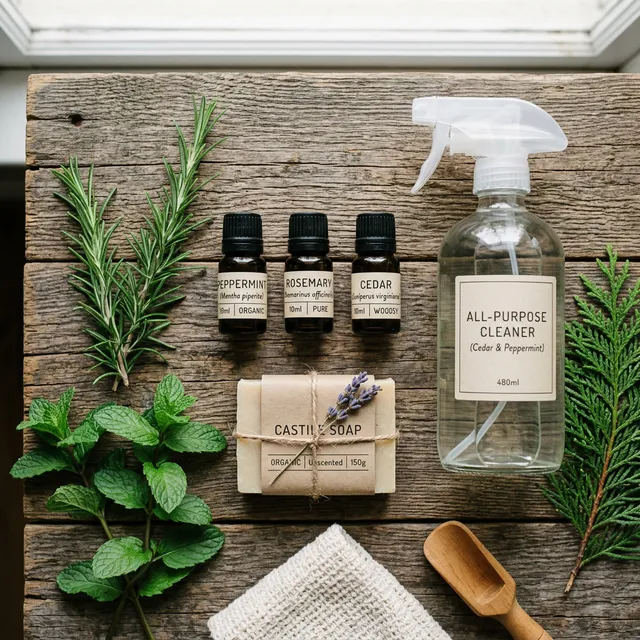
1. Peppermint Oil — The Broad-Spectrum Repellent
Research says: Studies from Cornell University and multiple agricultural research centers confirm that peppermint oil (menthol and menthone compounds) repels aphids, ants, spiders, flea beetles, mosquitoes, and whiteflies. A 2% peppermint oil solution reduced aphid settling on treated plants by 70-85% in greenhouse trials.
Best for: General pest deterrence across the garden. Peppermint is the closest thing to a universal insect repellent among essential oils.
How to use it: Add 15-20 drops of peppermint essential oil and 1 tablespoon castile soap to 1 quart of water. The soap emulsifies the oil so it mixes with water instead of floating on top. Spray all plant surfaces, focusing on leaf undersides and stem junctions.
Where to buy: Pure peppermint essential oil — look for 100% pure oil, not fragrance blends.
2. Rosemary Oil — Best Against Spider Mites
Research says: Rosemary oil contains 1,8-cineole and camphor, both demonstrated to have acaricidal (mite-killing) properties. Research published in the Journal of Economic Entomology showed rosemary oil achieved 80%+ mortality rates against two-spotted spider mites in direct contact tests.
Best for: Spider mite control and prevention, especially on houseplants and greenhouse crops.
How to use it: Add 10-15 drops rosemary essential oil and 1 tablespoon castile soap to 1 quart of water. Apply every 5-7 days during spider mite season. For active infestations, combine with an insecticidal soap spray for both contact kill and repellent protection.
3. Thyme Oil — Strongest Antimicrobial Action
Research says: Thymol, the primary compound in thyme oil, has documented insecticidal and antifungal properties. Agricultural research shows thyme oil kills aphids and whiteflies on contact and inhibits fungal spore germination. It’s one of the few essential oils with genuine killing action, not just repellent effect.
Best for: Combined pest and fungal disease management. If you’re fighting both aphids and powdery mildew, thyme oil addresses both problems.
How to use it: Add 10 drops thyme essential oil and 1 tablespoon castile soap to 1 quart of water. Thyme oil is potent — start with a lower concentration and increase only if needed. Always test on a single leaf first. Thyme oil at high concentrations can cause phytotoxicity on sensitive plants.
4. Neem Oil — The Systemic Option
Research says: Cold-pressed neem oil is technically an essential oil (pressed from neem tree seeds) and has the most extensive research backing of any botanical pesticide. Azadirachtin disrupts insect feeding, growth, molting, and reproduction. It’s effective against over 200 insect species.
Best for: Systemic protection against aphids, whiteflies, spider mites, and caterpillars. Unlike other essential oils that only work on the surface, neem is absorbed into plant tissue and affects insects that feed on treated leaves for 3-7 days after application.
How to use it: Mix 2 teaspoons cold-pressed neem oil with 1 tablespoon castile soap and 1 quart warm water. Our neem oil spray recipe covers the full process. For a detailed comparison with soap spray, read our insecticidal soap vs. neem oil breakdown.
5. Cedarwood Oil — Best for Soil Pests
Research says: Cedarwood oil (cedrol and thujopsene compounds) repels and kills ants, slugs, and soil-dwelling pests. It also has proven mosquito repellent properties. The EPA classifies cedarwood oil as a minimum-risk pesticide, exempting it from registration requirements.
Best for: Ant trails, slug deterrence, and perimeter defense around garden beds.
How to use it: Mix 20 drops cedarwood oil with 1 tablespoon castile soap and 1 quart water. Spray along ant trails, around raised bed perimeters, and on mulch surfaces where slugs travel. Cedarwood oil persists longer than most essential oils — its heavier molecules evaporate slower, giving it 3-5 days of residual repellent effect.
6. Lavender Oil — Polite Pest Repellent
Research says: Lavender oil (linalool and linalyl acetate) repels moths, fleas, flies, and mosquitoes. Its pest control action is moderate — less potent than peppermint or thyme against heavy pest pressure — but it’s the gentlest option for sensitive plants and gardens where fragrance matters.
Best for: Moth deterrence around brassicas, flea beetle repellence, and general flying insect reduction.
How to use it: Add 15 drops lavender oil and 1 tablespoon castile soap to 1 quart of water. Spray brassica crops (kale, broccoli, cabbage) to deter cabbage moth egg-laying. The mild concentration makes lavender one of the safest essential oil choices for sensitive plants.
Essential Oil Pest Spray Recipes
All-Purpose Garden Pest Repellent
- 10 drops peppermint oil
- 10 drops rosemary oil
- 5 drops thyme oil
- 1 tablespoon castile soap (Dr. Bronner’s Unscented)
- 1 quart water
Mix soap and oils first, then add water. Shake before each use. This combination provides broad-spectrum repellent coverage with multiple active compounds. The different oils target different pest groups, creating a more effective barrier than any single oil alone.
Spider Mite Prevention Spray
- 15 drops rosemary oil
- 5 drops peppermint oil
- 1 tablespoon castile soap
- 1 quart water
Apply to houseplants and garden crops every 5-7 days during dry conditions when spider mites are most active. This works as a preventive — for active infestations, combine with insecticidal soap treatment.
Ant and Slug Barrier Spray
- 15 drops cedarwood oil
- 10 drops peppermint oil
- 1 tablespoon castile soap
- 1 quart water
Spray along raised bed edges, around plant bases, and on ant trails. Reapply every 3-5 days and after rain.
Application Best Practices
Always emulsify with soap. Essential oils don’t mix with water. Without an emulsifier, the oils float on top and you spray plain water while the oil sits in the bottom of the bottle. Use 1 tablespoon of castile soap per quart as an emulsifier. Our essential oil insecticidal soap recipe covers this in detail.
Shake before every spray. Even with soap as an emulsifier, oils separate from water over time. Shake the bottle for 10-15 seconds before each use to ensure even distribution.
Test first. Every plant species reacts differently to essential oils. Spray a single leaf and wait 24 hours. Look for discoloration, wilting, or spotting. If none appears, proceed with full application.
Don’t overspray. More oil isn’t better. Concentrations above 2% frequently damage plant tissue. Stick to the recommended 10-20 drops per quart unless you’ve confirmed your specific plants tolerate higher doses.
Time it right. Apply in early morning or late evening. Essential oil compounds break down faster in direct sunlight and heat. Evening application maximizes the active window overnight when many pests are most active.
Essential Oils to Skip
Not everything marketed as a “pest control essential oil” works:
Citronella — effective against mosquitoes in the air but provides minimal pest control when applied to plants. It evaporates within hours and doesn’t deter garden pests like aphids or mites.
Tea tree oil — strong antifungal properties but limited insect repellent action at safe plant concentrations. Better for human skin applications than garden use.
Eucalyptus — some repellent effect against certain insects, but the research is thin for garden pest control. Its high cineole content can also damage sensitive plants.
Lemongrass — moderate mosquito repellent but no significant effect on the pests that damage garden crops.
Essential Oils vs. Insecticidal Soap
Essential oils and insecticidal soap serve different roles:
| Factor | Essential Oils | Insecticidal Soap |
|---|---|---|
| Primary action | Repellent | Contact kill |
| Speed | Slow (deters over days) | Fast (kills in minutes) |
| Residual effect | 2-5 days | None (inert when dry) |
| Best use | Prevention | Active infestations |
| Cost per application | Higher | Lower |
The smartest approach combines both. Use insecticidal soap to kill active pest colonies, then switch to essential oil sprays for ongoing repellent protection between soap treatments. The soap handles the infestation; the oils prevent recolonization.
This one-two approach is especially effective against spider mites, aphids, and whiteflies — the three most common garden pests that respond well to both soap contact kill and essential oil repellent action.
Frequently Asked Questions
What essential oil keeps all bugs away from plants? ▼
No single essential oil repels all insects. Peppermint oil is the closest to a broad-spectrum repellent — it deters aphids, ants, spiders, beetles, and mosquitoes. But even peppermint works best when combined with other oils or integrated into a broader pest management plan.
Can essential oils harm plants? ▼
Yes, undiluted essential oils burn plant tissue. Always dilute to 0.5-1% concentration (10-20 drops per quart of water) and use castile soap as an emulsifier. Test on a single leaf first and wait 24 hours. Sensitive plants like ferns, succulents, and seedlings are most vulnerable.
How often should I spray essential oil pest repellent? ▼
Essential oils evaporate quickly and lose effectiveness within 2-3 days. Reapply every 3-5 days during active pest season, and always reapply after rain. Consistency matters more than concentration — regular light applications work better than occasional heavy ones.
Are essential oil sprays safe for vegetable gardens? ▼
Food-grade essential oils like peppermint, rosemary, and thyme are safe for edible crops at proper dilution. Stop application 2-3 days before harvest to avoid flavor transfer. The oils break down rapidly and leave no harmful residues in soil or on produce.
Do essential oils kill beneficial insects? ▼
Essential oils can repel beneficial insects while the spray is wet, but they have minimal residual effect once dry. Apply in early morning or evening when pollinators are less active, and avoid spraying open flowers. This timing protects bees and butterflies while still deterring pests.
 ✓
✓ The Garden Soap Team writes every recipe and guide on this site. Formulas follow published horticultural guidance — university extension resources, the UC IPM program, and OMRI standards — and we cross-check concentrations and plant-safety warnings against documented gardener experience before publishing. No harsh chemicals, no guesswork passed off as expertise.
📚 Related Articles
recipesEssential Oil Insecticidal Soap Spray
Adding essential oils to your insecticidal soap can boost effectiveness and repel pests. Here are the recipes that work and the ones that waste your oil.
 learn
learnNatural Pest Control Methods That Actually Work
Proven natural pest control methods for gardens and homes. Insecticidal soap, beneficial insects, and companion planting — no synthetic chemicals needed.
 learn
learn15 Plants That Repel Bugs (Indoors & Outdoors)
These 15 plants repel mosquitoes, aphids, and flies naturally. Research-backed picks for indoors and outdoors — from marigolds to mint.