Garlic Spray for Garden Pests: DIY Recipe
Make a potent garlic pest spray in 20 minutes. This recipe repels aphids, whiteflies, spider mites, and even deer from your garden.
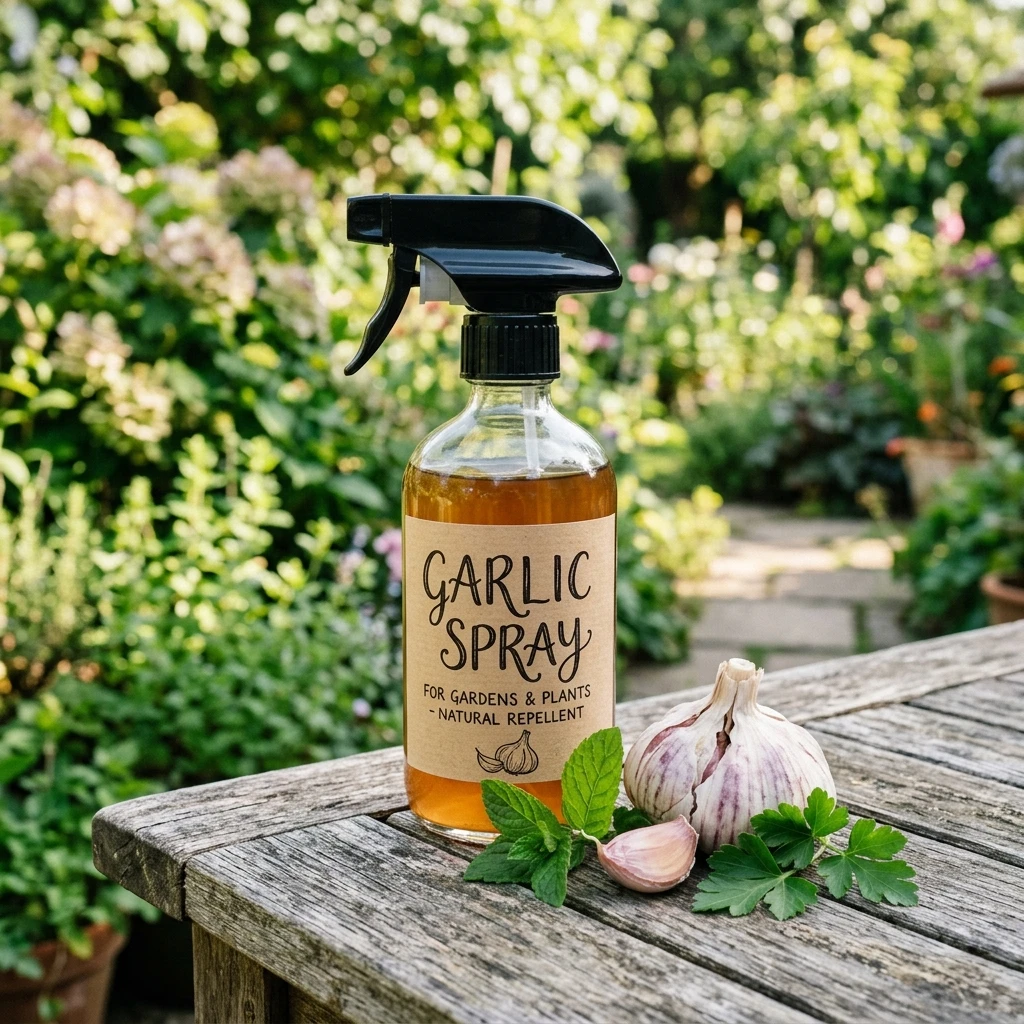
Why Garlic Works as a Pest Spray
Garlic owes its pest-fighting power to sulfur compounds — primarily allicin, diallyl disulfide, and diallyl trisulfide. When garlic cells are crushed, the enzyme alliinase converts alliin into allicin, which produces that sharp, pungent smell we associate with fresh garlic.
Insects don’t just dislike that smell. Research from the Indian Journal of Entomology demonstrated that garlic extract reduced aphid populations by 60-80% through repellent action alone, without killing the insects directly. The sulfur compounds overwhelm the chemical signals pests use to locate host plants, effectively making your garden invisible to them.
Garlic spray works through two mechanisms:
- Scent masking — the volatile sulfur compounds overpower the plant scents that attract aphids, whiteflies, and other pests
- Feeding deterrence — the bitter, sulfurous taste discourages insects that do land on treated leaves from feeding
This dual action makes garlic spray one of the most versatile homemade pest treatments available. It won’t kill existing colonies as fast as insecticidal soap, but it prevents new pests from establishing in the first place.
Instructions
Step 1: Make the Garlic Concentrate
- Peel and mince an entire head of garlic (8-10 cloves)
- Combine the minced garlic with 2 tablespoons of vegetable oil in a glass jar
- Let the mixture sit overnight (12-24 hours) — this extracts the maximum amount of allicin and sulfur compounds into the oil
- Strain through cheesecloth or a fine mesh strainer into a clean container
- Press the garlic solids firmly to extract every drop of the infused oil
The overnight steeping is what separates an effective garlic spray from a weak one. Fresh garlic blended and used immediately contains far less allicin than garlic that’s had time to fully convert its sulfur compounds.
Step 2: Mix the Spray
- Add the strained garlic-oil concentrate to your spray bottle
- Add 1 tablespoon of pure liquid castile soap (Dr. Bronner’s Unscented)
- Fill with water to make 1 quart total
- Shake well — the soap emulsifies the oil so it mixes with water instead of floating on top
The soap serves double duty here: it’s an emulsifier for the garlic oil and a contact insecticide in its own right. Any soft-bodied insects the spray hits directly will be killed by the soap component, while the garlic provides the lasting repellent layer.
Step 3: Test and Apply
Always test first. Spray a small section of one plant and wait 24 hours. Some plants, particularly those with waxy or fuzzy leaves, can react to the oil component. If no spotting or wilting appears, proceed with full application.
- Spray all leaf surfaces, focusing on undersides where pests hide
- Apply in early morning or late evening — never in direct midday sun
- Cover stems, branch crotches, and flower buds (but skip open blooms to protect pollinators)
- Spray until liquid just begins to drip from the leaves — full coverage matters
For proper timing advice, see our guide on when to spray insecticidal soap. The same timing rules apply to garlic spray.
How to Adjust the Recipe for Different Pests
This base recipe handles most soft-bodied garden pests. For specific situations, adjust the concentration:
| Pest Problem | Adjustment | Why |
|---|---|---|
| Aphids (mild) | Standard recipe | Garlic repellent plus soap contact kill |
| Spider mites | Add 1 tsp neem oil | Neem disrupts mite reproduction |
| Cabbage worms | Double the garlic | Moths are strongly deterred by sulfur scent |
| Japanese beetles | Add 1 tsp cayenne pepper | Capsaicin adds taste deterrent |
| Deer and rabbits | Triple the garlic, spray perimeter | Mammals are more sensitive to sulfur compounds |
For a recipe that adds the pepper component, see our garlic pepper soap spray — it’s the next level up when garlic alone isn’t enough.
Storage and Shelf Life
Garlic spray breaks down faster than plain soap spray because the sulfur compounds are volatile. Proper storage extends your batch life:
- Garlic-oil concentrate (before adding soap/water): Keeps 2 weeks refrigerated in a sealed glass jar
- Mixed spray (ready to use): Use within 48 hours. The soap and water accelerate breakdown of the active compounds
- Store concentrate in glass, not plastic. The sulfur compounds can leach chemicals from plastic containers over time
Make a large batch of concentrate and store it in the fridge. Mix fresh spray every other day during peak pest season. This saves time while keeping the spray at full strength.
Application Schedule
| Season Phase | Frequency | Purpose |
|---|---|---|
| Early spring (before pests arrive) | Once weekly | Establish a repellent barrier on new growth |
| Active pest season | Every 5-7 days | Maintain repellent strength and kill new arrivals |
| After rain | Reapply within 24 hours | Rain washes away the sulfur compounds |
| Fall wind-down | Every 2 weeks | Protect late-season crops |
Consistency matters more than concentration. A weekly application of standard-strength spray outperforms a sporadic blast of double-strength spray. Pests return to unprotected plants within days, so maintaining that scent barrier is the key.
What Garlic Spray Won’t Do
Be realistic about garlic spray’s limitations so you can pair it with the right complementary methods:
It won’t kill established colonies. Garlic is primarily a repellent. If you already have a heavy aphid or spider mite infestation, start with insecticidal soap to knock down the active population, then switch to garlic spray to prevent recolonization.
It won’t work on hard-bodied insects. Beetles, squash bugs, and other hard-shelled pests are less affected by contact sprays. Garlic’s repellent scent provides some deterrence, but don’t rely on it as a primary control for these pests.
It won’t last through heavy rain. Water washes garlic compounds off leaves within hours. Plan your application around the weather forecast, and always reapply after significant rainfall.
It may affect flavor. Spraying garlic directly on herbs or salad greens close to harvest can impart a mild garlic taste. Stop applications 3-5 days before harvesting leafy crops you’ll eat raw.
Pairing Garlic Spray With Other Methods
Garlic spray works best as the prevention layer in a broader pest management strategy:
- Start clean — remove existing pest colonies with soap spray or water blast
- Apply garlic spray weekly to establish a repellent barrier
- Plant garlic companions — actual garlic or chives planted near pest-prone crops provide 24/7 sulfur compound release without spraying
- Add neem oil to the garlic spray every other application for systemic protection
- Encourage predators — garlic spray doesn’t harm ladybugs, lacewings, or parasitic wasps once dry
This layered strategy follows the same integrated pest management principles that professional organic growers use. Prevention first, treatment when needed, and always protecting the beneficial insects that do the heavy lifting between your spray sessions.
Frequently Asked Questions
Can I use garlic powder instead of fresh garlic? Fresh garlic produces significantly more allicin than dried powder. If fresh garlic isn’t available, use 2 tablespoons of garlic powder per quart, but expect about 50% less repellent strength. Granulated garlic falls somewhere in between. For the strongest spray, always choose fresh.
Will garlic spray hurt my plants? At the standard concentration (one head per quart), garlic spray is safe for most garden plants. The oil component can cause leaf spotting on a few sensitive species — test a small area first. Plants with hairy or fuzzy leaves (like some herbs) may hold the oil longer and show more sensitivity.
Does garlic spray repel beneficial insects too? Garlic spray can temporarily deter beneficial insects while wet. Once dry (usually within a few hours), the repellent effect targets mainly soft-bodied pests and mammals. Pollinators may avoid freshly sprayed flowers, which is why you should skip open blooms during application.
How does garlic spray compare to neem oil? Garlic is primarily a repellent — it keeps pests away. Neem oil is a systemic disruptor — it interferes with feeding and reproduction of pests already present. They complement each other well. Use neem oil spray for active infestations and garlic spray for ongoing prevention.
Can I grow my own garlic for spray? Absolutely. Plant garlic cloves in fall for a summer harvest. Homegrown garlic often has higher allicin content than store-bought because it hasn’t been treated for long-term storage. Softneck varieties produce more cloves per head, giving you more spray material per plant.
 ✓
✓ The Garden Soap Team writes every recipe and guide on this site. Formulas follow published horticultural guidance — university extension resources, the UC IPM program, and OMRI standards — and we cross-check concentrations and plant-safety warnings against documented gardener experience before publishing. No harsh chemicals, no guesswork passed off as expertise.
📚 Related Articles
 recipes
Garlic Pepper Insecticidal Soap Spray
A powerful triple-action pest spray that kills on contact, repels with garlic, and deters with capsaicin. Great for gardens with persistent pest problems.
 recipes
Basic Castile Insecticidal Soap Spray
The simplest and most effective homemade insecticidal soap recipe using pure castile soap. Works on aphids, whiteflies, and spider mites.
 recipes
Neem Oil Insecticidal Soap Spray
Soap knocks pests down; neem adds a few days of feeding disruption. Mix ratios, evening timing, and when plain castile is still enough.