Insecticidal Soap for Succulents and Houseplants: Safe Application Guide
Garden Soap Team
· 8 min read
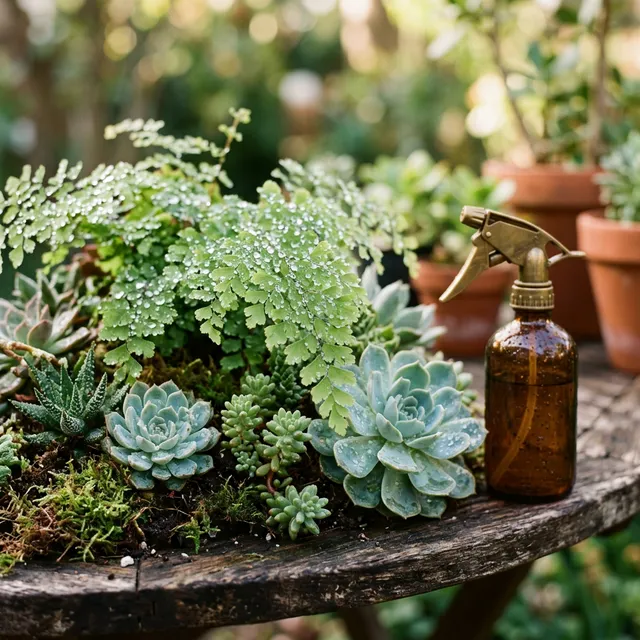
Yes, insecticidal soap is safe for most succulents — but only at half the standard concentration. Succulents have waxy coatings (called farina or epicuticular wax) that full-strength soap can strip away, leaving permanent cosmetic damage and exposing the plant to sunburn. Use 1/2 tablespoon of pure castile soap per quart of distilled water, and always test first.
Key Takeaways
- Succulents need half-strength insecticidal soap (0.5% concentration instead of the standard 1–2%)
- The waxy farina coating on echeveria, pachyphytum, and graptoveria does not regenerate once stripped by soap
- Thick-leaved succulents (jade, aloe) tolerate soap better than thin-leaved types (string of pearls, sedum)
- Mealybugs are the most common succulent pest and require a multi-week treatment protocol
- Some situations call for neem oil instead of soap — especially for scale insects and long-term prevention
- Always spray in the early morning when temperatures are below 80°F and the plant is out of direct sun
Which Succulents Are Sensitive to Insecticidal Soap?
Not all succulents respond to soap the same way. The biggest factor is their protective coating — the thicker the wax, the higher the risk of visible damage when soap dissolves it.
High Sensitivity — Use Extreme Caution
| Genus | Why It’s Risky |
|---|---|
| Echeveria | Heavy farina coating stripped by soap, cannot regenerate |
| Pachyphytum | Thick powdery wax, same farina issue as echeveria |
| Graptoveria | Hybrid with echeveria genetics, inherits farina sensitivity |
| Kalanchoe tomentosa (Panda Plant) | Fuzzy leaf hairs trap soap, causing prolonged contact burns |
| Cotyledon | Powdery coating on leaves is easily damaged |
Moderate Sensitivity — Half-Strength OK With Patch Test
| Genus | Notes |
|---|---|
| Crassula (Jade Plant) | Thick leaves tolerate dilute soap, but new growth is vulnerable |
| Haworthia | Thin-skinned windows on leaf tips can cloud with soap residue |
| Gasteria | Tolerates soap better than most, but test the mottled varieties |
| Sedum | Thin leaves dry fast, which actually reduces contact damage |
Low Sensitivity — Tolerates Standard Half-Strength Application
| Genus | Notes |
|---|---|
| Aloe vera | Tough, thick leaves handle soap well |
| Sansevieria (Snake Plant) | Very hardy, minimal damage risk |
| Euphorbia | Thick stems resist soap, but avoid contact with milky sap |
| Aeonium | No farina coating, tolerates normal dilution |
For a full breakdown of plant sensitivity beyond succulents, read our Insecticidal Soap Plant Safety Guide.
Why Do Succulents Need a Weaker Soap Concentration?
Standard insecticidal soap recipes call for 1–2 tablespoons of castile soap per quart of water. That concentration works great on roses, tomatoes, and most vegetable garden plants. But it can wreck succulents.
Here is why: the fatty acids in soap — the same compounds that kill pests by dissolving their cell membranes — also dissolve the waxy lipids that form farina. This wax layer serves two critical purposes for succulents:
- Sun protection — farina reflects UV light, preventing sunburn in bright conditions
- Moisture retention — the wax slows evaporation from leaf surfaces
Strip that wax, and you get a succulent that sunburns easily and dehydrates faster. The damage shows up as white patches, brown spots, or a dull, matte appearance where the leaves used to look powdery and bright.
The fix is simple: cut the soap in half. Use 1/2 tablespoon (1.5 teaspoons) of pure castile soap per quart of distilled water. This gives you a roughly 0.5% solution — strong enough to kill soft-bodied pests on contact but gentle enough to leave most wax coatings intact.
How to Dilute Insecticidal Soap for Thick vs. Thin-Leaved Plants
Not all houseplants and succulents need the same ratio. Leaf thickness and surface texture determine how much soap a plant can handle.
Thick-Leaved Plants (Jade, Aloe, Snake Plant, Rubber Plant)
- Dilution: 1 tablespoon castile soap per quart of water (standard 1% strength)
- Why: Thick cuticles and dense cell walls provide a built-in buffer against soap damage
- Application: Spray until leaves are evenly coated but not dripping heavily
- Rinse: Optional — thick leaves handle residual soap film without issues
Thin-Leaved Plants (String of Pearls, Ferns, Calathea, Peperomia)
- Dilution: 1/2 tablespoon castile soap per quart of water (half-strength, 0.5%)
- Why: Thin cuticles allow soap to penetrate faster, increasing burn risk
- Application: Light, even mist — avoid saturating leaves
- Rinse: Rinse with plain distilled water 30 minutes after application
Farina-Coated Succulents (Echeveria, Pachyphytum, Graptoveria)
- Dilution: 1/2 tablespoon castile soap per quart of water (half-strength)
- Why: Soap dissolves the farina wax coating that protects against UV and moisture loss
- Application: Spray the pest clusters directly rather than blanketing the entire plant
- Rinse: Gentle rinse after 20 minutes to minimize wax loss
Fuzzy or Hairy-Leaved Plants (Panda Plant, African Violet, Lamb’s Ear)
- Dilution: Avoid spraying entirely — use spot treatment instead
- Why: Leaf hairs trap soap droplets against the leaf surface, creating prolonged contact that causes burns
- Application: Dip a cotton swab in half-strength soap solution and apply directly to pests
- Rinse: Blot treated areas gently with a damp cloth
If you are mixing your own soap spray for the first time, our How to Make Insecticidal Soap guide walks through the full recipe and common mistakes.
How Do You Treat Mealybugs on Succulents With Insecticidal Soap?
Mealybugs are by far the most common pest on indoor succulents. They look like tiny white cotton balls wedged into leaf joints, and they spread fast. Insecticidal soap kills them, but you need a specific protocol because of their waxy protective coating.
The Mealybug Treatment Protocol
Week 1: Initial Knockdown
- Isolate the plant from all other houseplants immediately
- Manually remove visible mealybugs using a cotton swab dipped in 70% isopropyl rubbing alcohol — this dissolves their waxy armor
- Inspect every crevice — check leaf axils, the base of rosettes, under leaves, and where stems meet the soil
- Spray with half-strength insecticidal soap (1/2 tablespoon Dr. Bronner’s Unscented Castile Soap per quart of distilled water)
- Wait 30 minutes, then rinse gently with plain water
Week 2–4: Follow-Up Treatments
- Spray every 5 days — mealybug eggs hatch in cycles, and soap does not kill eggs
- Continue the alcohol swab step for any new visible bugs before each spray
- Check the soil surface and pot rim — mealybugs sometimes hide at the root level
- Keep the plant isolated the entire time
Week 5: Assessment
- If you see no mealybugs after two consecutive clean inspections (5 days apart), the plant is clear
- Return it to its normal spot but continue weekly visual inspections for another month
For heavy infestations that do not respond to soap alone, add 1 teaspoon of cold-pressed neem oil to your spray mix. The azadirachtin in neem disrupts the mealybug reproductive cycle, which speeds up colony collapse.
What About Aphids and Spider Mites on Succulents?
Mealybugs get the most attention, but aphids and spider mites also infest succulents regularly.
Aphids on Succulents
Aphids cluster on new growth tips and flower stalks. They are easier to treat than mealybugs because they lack the waxy armor.
- Spray with half-strength soap and coat all surfaces where you see clusters
- Rinse after 30 minutes
- Repeat in 5–7 days — one treatment usually handles a small colony, but eggs may hatch
- Check neighboring plants — aphids spread quickly between pots on a windowsill
Spider Mites on Succulents
Spider mites show up as fine webbing between leaves and tiny stippled dots on leaf surfaces. They thrive in hot, dry indoor conditions.
- Spray with half-strength soap, focusing on leaf undersides where mites concentrate
- Increase humidity around the plant — spider mites hate moisture. Group plants together or place a shallow tray of water and pebbles beneath the pot
- Repeat every 4–5 days for 2–3 weeks
For a full pest-by-pest treatment guide for indoor growing, see our Insecticidal Soap for Indoor Plants article.
When Should You Use Neem Oil Instead of Soap?
Insecticidal soap and neem oil are both organic pest treatments, but they work differently. Knowing when to reach for each one saves you time and plant damage.
Use Insecticidal Soap When:
- You have an active infestation of soft-bodied pests (aphids, mealybugs, spider mites, whiteflies)
- You need immediate knockdown — soap kills on contact within minutes
- You want a treatment with no residual effect — soap breaks down as soon as it dries, so it will not harm beneficial insects that visit later
Use Neem Oil When:
- You are dealing with scale insects — their hard shells block soap from reaching their bodies
- You want preventive protection — neem leaves a residual coating that deters pests for days after application
- You need to disrupt reproduction — azadirachtin in neem prevents larvae from molting and maturing
- You are treating soil-dwelling pests like fungus gnat larvae with a soil drench
Use Both Together When:
- Mealybug infestations are severe and soap alone is not enough
- You want to knock down the current population (soap) AND prevent re-infestation (neem)
- Mix 1/2 tablespoon castile soap + 1 teaspoon cold-pressed neem oil per quart of distilled water
One warning: neem oil can clog stomata on succulent leaves if applied too heavily. Use it sparingly — a light mist, not a drench — and never apply neem in direct sunlight or above 85°F.
How Do You Apply Insecticidal Soap to Succulents Step by Step?
Gather a 32 oz glass spray bottle, pure castile soap, distilled water, cotton swabs, and paper towels. Then follow this process:
- Move the plant to shade — a bathroom or covered porch works well
- Mix half-strength soap — 1/2 tablespoon castile soap per quart of distilled water, swirl gently
- Patch test first — spray 2–3 leaves, wait 48 hours (succulents react slower than leafy plants)
- Spray the full plant — coat crevices and leaf undersides where pests hide
- Rinse after 20–30 minutes with plain distilled water
- Blot rosette centers — standing water in the crown causes rot
- Keep out of direct sun for 24–48 hours and repeat every 5–7 days as needed
What Mistakes Should You Avoid When Using Soap on Succulents?
These errors cause the most damage:
- Using tap water — hard water minerals react with soap to form salts that leave white spots on leaves and damage farina. Always use distilled or rainwater.
- Spraying in direct sunlight — water droplets magnify light and cause burn spots. Soap residue makes this worse. Spray in shade, always.
- Skipping the rinse — soap residue left for hours strips wax slowly but steadily. Rinse after 20–30 minutes.
- Spraying daily — this burns leaves without speeding up pest control. Stick to the 5–7 day cycle.
- Using dish soap — Dawn, Palmolive, and similar detergents contain degreasers that are much harsher than pure castile soap. Use Dr. Bronner’s Unscented or a similar pure castile product.
Can You Use Insecticidal Soap on All Houseplants?
Most common houseplants tolerate standard concentration (1 tablespoon per quart). Here is a quick reference:
| Tolerance Level | Plants |
|---|---|
| Full strength OK | Pothos, philodendron, monstera, spider plant, rubber plant, ZZ plant, dracaena |
| Half-strength needed | All succulents, calathea, maranta, ferns, peperomia, string of pearls |
| Spot-treat only | African violet, begonia rex, kalanchoe tomentosa (fuzzy/hairy leaves trap soap) |
For a deeper breakdown of indoor application methods, our Insecticidal Soap for Indoor Plants guide covers the bathtub method, isolation protocols, and pest-specific instructions. The shorter houseplant protocol — bathtub, isolation, and when foliar soap skips soil larvae — lives on insecticidal soap for indoor plants.
How Do You Prevent Pests on Succulents in the First Place?
Treating an infestation is always harder than preventing one. These habits keep pests off your succulents year-round:
- Quarantine new plants — keep any new succulent isolated for 2 weeks before placing it near your collection
- Inspect weekly — flip leaves, check rosette centers, and look at the soil surface
- Avoid overwatering — soggy soil attracts fungus gnats and creates stress that makes plants vulnerable
- Improve air circulation — a small fan near your plant shelf discourages spider mites and reduces fungal issues
- Clean leaves monthly — wipe smooth-leaved succulents with a damp cloth to remove dust and early-stage pests
- Preventive neem spray — a very light neem oil mist every 3–4 weeks deters most common pests before they establish
Your Succulent Pest Treatment Action Plan
Start with identification. Look closely at the pest — cotton-like clusters mean mealybugs, fine webs mean spider mites, and green or black clusters on new growth mean aphids.
Mix half-strength insecticidal soap using pure castile soap and distilled water. Test on a few leaves and wait 48 hours. If the plant looks good, spray the full plant, rinse after 30 minutes, and repeat every 5–7 days until the pests are gone.
For farina-coated species like echeveria, spray only the pest clusters rather than the whole plant. For fuzzy-leaved succulents, skip the spray bottle and use a soap-dipped cotton swab.
And if soap alone is not getting results after 2–3 treatments, add neem oil to your mix or switch to a neem-only approach for pests with hard shells like scale.
Your succulents can absolutely be treated safely — you just have to respect their wax and adjust your ratios.
Frequently Asked Questions
Can you spray insecticidal soap on succulents? ▼
Yes, but succulents need a weaker concentration than most plants. Use half the standard dose — about 1/2 tablespoon of pure castile soap per quart of distilled water. Always test on one leaf first, wait 48 hours, and spray only in the early morning when temperatures are below 80°F.
Will insecticidal soap remove the farina on succulents? ▼
It can. Farina is the powdery, waxy coating on echeveria, pachyphytum, and graptoveria. Strong soap concentrations strip this coating permanently, since it does not grow back. Use the lowest effective dilution, avoid rubbing leaves, and never spray farina-heavy species unless absolutely necessary.
How do you treat mealybugs on succulents with insecticidal soap? ▼
Dip a cotton swab in rubbing alcohol and dab visible mealybugs first to dissolve their waxy coating. Then spray the entire plant with half-strength insecticidal soap. Repeat every 5 days for 3 to 4 weeks to catch newly hatched nymphs.
Is neem oil or insecticidal soap better for succulents? ▼
Insecticidal soap works faster for active infestations of aphids, spider mites, and mealybugs. Neem oil is better for prevention and for pests like scale that have hard shells soap cannot penetrate. For most succulent owners, soap treats the outbreak and neem prevents the next one.
What houseplants should you never spray with insecticidal soap? ▼
Avoid spraying hairy-leaved plants like African violets, fuzzy succulents like kalanchoe tomentosa, and delicate ferns at full strength. These plants trap soap in their leaf hairs, causing prolonged contact that leads to burns. Use a cotton swab dipped in diluted soap to spot-treat pests on these species instead.
 ✓
✓ The Garden Soap Team writes every recipe and guide on this site. Formulas follow published horticultural guidance — university extension resources, the UC IPM program, and OMRI standards — and we cross-check concentrations and plant-safety warnings against documented gardener experience before publishing. No harsh chemicals, no guesswork passed off as expertise.
📚 Related Articles
guidesInsecticidal Soap Plant Safety Guide
Insecticidal soap is gentle — but not on every plant. Learn which plants are sensitive, how to protect them, and safe application tips.
 guides
How to Make Insecticidal Soap at Home
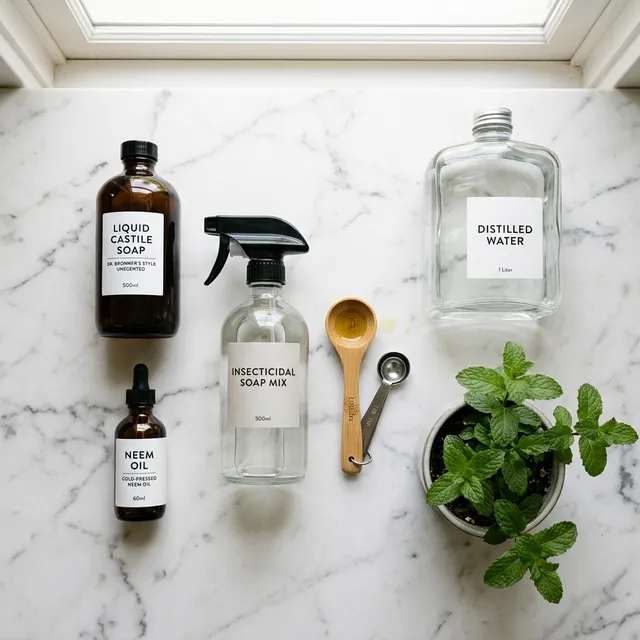
Core 3-ingredient method: 1 tablespoon unscented castile per quart, leaf-underside coverage, and the mixing mistakes that burn plants.
 guides
How to Use Insecticidal Soap on Indoor Plants (Complete Guide)
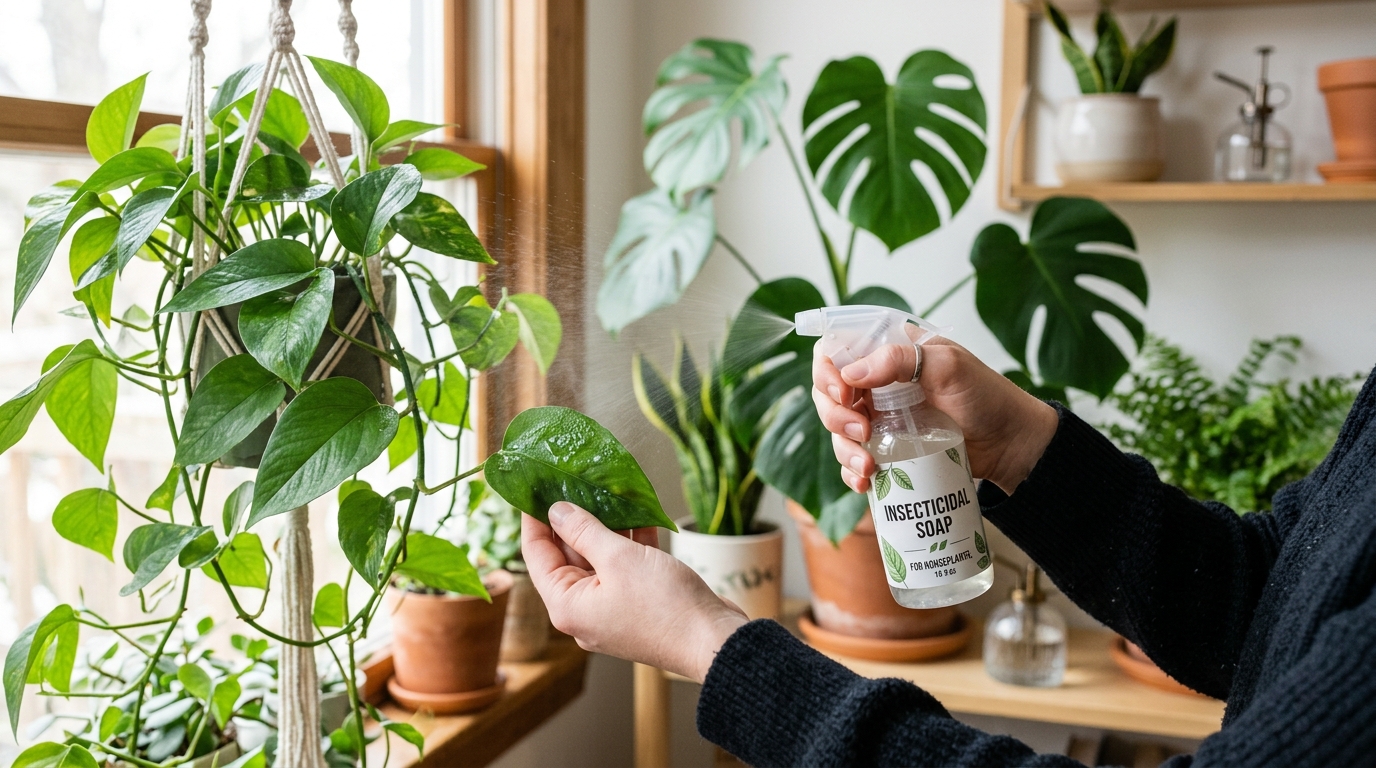
Everything you need to know about treating indoor plant pests with insecticidal soap — dilution ratios, safe vs. sensitive species, ventilation, and application tips.