Homemade Organic Fungicide Recipes That Work
Three proven homemade fungicide recipes for powdery mildew, black spot, blight, and rust. Baking soda, neem oil, and milk sprays explained.
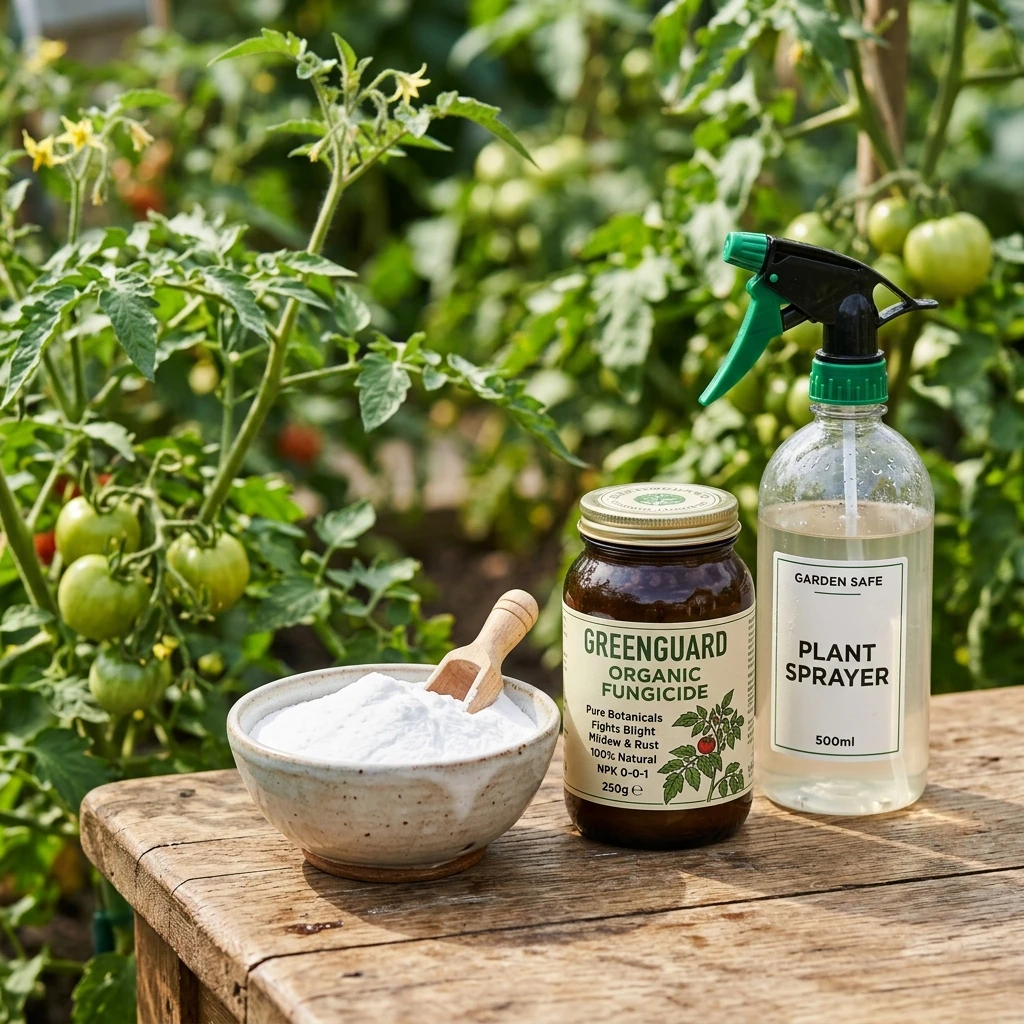
Why Your Garden Needs a Fungicide (Not Just an Insecticide)
Most organic gardeners focus on insect pests and ignore fungal diseases until white patches, black spots, or rusty pustules are already spreading across their plants. By then, the infection is established and much harder to control.
Fungal diseases cause more crop loss worldwide than insect damage. In a home garden, powdery mildew alone can reduce squash and cucumber yields by 30-50% in a bad year. Black spot defoliates roses by midsummer. Early blight turns productive tomato plants into bare stalks weeks before the season should end.
The good news: homemade fungicides are cheap, effective as preventives, and use ingredients you already have in your kitchen. The bad news: no fungicide — organic or synthetic — cures advanced fungal infections. These recipes work best when applied at the first sign of disease or as preventive maintenance throughout the growing season.
Recipe 1: Baking Soda Fungicide Spray
This is the most researched and widely recommended homemade fungicide. Baking soda (sodium bicarbonate) raises the pH on leaf surfaces, creating conditions that inhibit fungal spore germination. Cornell University research confirmed its effectiveness against powdery mildew on roses and cucurbits.
Ingredients
- 1 tablespoon baking soda
- 1 tablespoon pure liquid castile soap (Dr. Bronner’s Unscented)
- 1 gallon water
- 1 tablespoon vegetable oil (helps the spray stick to leaves)
Instructions
- Dissolve the baking soda in the gallon of water. Stir until fully dissolved — undissolved granules can burn leaf tissue.
- Add the castile soap and vegetable oil. The soap acts as a surfactant so the spray coats leaves evenly instead of beading up and rolling off.
- Stir gently. Don’t shake hard enough to create foam.
- Pour into a garden sprayer or spray bottle.
- Spray all plant surfaces, especially leaf undersides and new growth where fungal spores land first.
When to Use
- Preventive: Every 7-14 days during humid weather, starting before symptoms appear
- Active infection: Every 5-7 days until symptoms stop spreading, then biweekly for prevention
- Best for: Powdery mildew, black spot, anthracnose
Important Notes
Do not exceed 1 tablespoon of baking soda per gallon. Higher concentrations cause sodium buildup on leaves, leading to marginal leaf burn. If you’re spraying weekly for an entire season, the sodium can also accumulate in soil. Potassium bicarbonate (sold as a garden fungicide) is a better long-term alternative, but regular baking soda works well for occasional use.
Recipe 2: Neem Oil Fungicide
Neem oil pulls double duty. While most gardeners know it as an insecticide, cold-pressed neem oil is also an effective fungicide. The azadirachtin and other compounds in neem disrupt fungal cell growth and prevent spore germination on treated surfaces.
Ingredients
- 2 teaspoons cold-pressed neem oil (Harris Cold-Pressed Neem Oil)
- 1 tablespoon pure liquid castile soap
- 1 quart warm water (70-80°F)
Instructions
- Combine the neem oil and castile soap in a small cup. Stir until they form a milky emulsion.
- Add warm water to your spray bottle.
- Pour in the soap-neem mixture and shake vigorously for 30 seconds.
- Use within 8 hours — diluted neem oil breaks down quickly.
When to Use
- Preventive: Every 14 days during the growing season
- Active infection: Weekly until symptoms stop spreading
- Best for: Powdery mildew, black spot, rust, leaf spot
The neem fungicide recipe is almost identical to the neem oil insecticidal soap spray because it is. When you spray for pests with neem, you’re also getting fungal protection. That dual action is one of neem’s biggest advantages over plain insecticidal soap, which has no fungicidal properties.
Neem vs. Baking Soda
| Factor | Baking Soda | Neem Oil |
|---|---|---|
| Powdery mildew | Good | Good |
| Black spot | Good | Better |
| Rust | Fair | Good |
| Also kills insects? | No | Yes |
| Cost per application | Lower | Higher |
| Plant safety | Watch sodium buildup | Watch for oil burn in sun |
| Shelf life (mixed) | Several days | 8 hours max |
Use baking soda as your everyday preventive. Switch to neem when you want combined pest and disease control, or when baking soda alone isn’t holding the line.
Recipe 3: Milk Fungicide Spray
This sounds like folk wisdom, but it’s backed by peer-reviewed research. A 2006 study published in Crop Protection found that milk spray was as effective as synthetic fungicides for controlling powdery mildew on zucchini. The proteins in milk, when exposed to sunlight, produce free radicals that kill fungal cells on contact.
Ingredients
- 1 part whole milk (not skim — the fat matters)
- 9 parts water
- That’s it. No soap needed.
Instructions
- Mix one cup of whole milk with nine cups of water.
- Pour into a spray bottle.
- Spray all plant surfaces in the morning so sunlight activates the antifungal proteins.
- Apply weekly during humid weather.
When to Use
- Best for: Powdery mildew specifically (less effective against other fungi)
- Ideal for: Edible crops near harvest where you want zero chemical residue
- Timing: Must be applied in morning — sunlight is required for the mechanism to work
The Downside
Milk spray can develop a sour smell in warm weather, especially if over-applied. Use the 1:9 ratio and don’t drench plants. A light, even coating is enough. The smell dissipates within a day as the milk proteins break down in UV light.
Which Fungicide for Which Disease?
| Disease | Symptoms | Best Homemade Treatment |
|---|---|---|
| Powdery mildew | White powdery coating on leaves | Any of the three recipes |
| Black spot | Black spots with yellow halos on rose leaves | Neem oil or baking soda |
| Early blight | Brown concentric rings on tomato leaves | Baking soda preventive |
| Downy mildew | Yellow patches on top, fuzzy growth underneath | Neem oil (most effective) |
| Rust | Orange/brown pustules on leaf undersides | Neem oil |
| Leaf spot | Brown/black spots on various plants | Baking soda or neem |
| Botrytis (gray mold) | Gray fuzzy mold on flowers/fruit | Improve airflow first, then neem |
Application Tips for All Three Recipes
Spray preventively, not reactively. Fungicides work by preventing spore germination. Once mycelium is established in leaf tissue, surface sprays can slow the spread but won’t kill the internal infection. Start spraying before disease appears — especially during warm, humid weather.
Cover the undersides. Fungal spores often germinate on leaf undersides where moisture lingers longer. Spray from below as well as above.
Time it right. Apply in early morning. This gives the spray time to dry before afternoon heat (reducing burn risk) and ensures the treatment is on the leaves during the daytime hours when fungal spores are most active.
Don’t spray wet foliage. If leaves are already dripping with dew or rain, the fungicide gets diluted before it can work. Wait until foliage is dry, then apply.
Improve air circulation. No fungicide compensates for poor air flow. Prune crowded branches, space plants properly, and avoid overhead watering. Fungal diseases thrive in still, humid conditions. A garden with good airflow needs fewer fungicide applications.
Prevention: Stop Fungal Disease Before It Starts
Spraying is treatment. These practices are prevention:
Water at the base, not overhead. Wet foliage is the primary driver of fungal disease. Drip irrigation or soaker hoses keep leaves dry while delivering water where roots need it.
Space plants properly. Crowded plantings trap humid air between leaves, creating ideal conditions for fungal growth. Follow spacing recommendations on seed packets even when it feels wasteful.
Prune for airflow. Remove interior branches that block air movement through the plant canopy. Roses, tomatoes, and squash all benefit from selective thinning that lets breeze through.
Rotate crops annually. Fungal spores overwinter in soil. Planting tomatoes in the same spot year after year guarantees increasing blight pressure. Move crop families to new locations each season.
Remove infected material immediately. Don’t wait for the season to end. Prune off leaves showing fungal symptoms and dispose of them in the trash, not your compost pile. Composting doesn’t reliably kill fungal spores.
Mulch the soil surface. A 2-3 inch layer of mulch prevents soil-borne spores from splashing up onto lower leaves during rain. This simple step alone reduces early blight incidence on tomatoes dramatically.
Combining Fungicide and Pest Control
If your garden has both pest and disease problems (and most do by midsummer), neem oil is the obvious choice for handling both in a single application. The neem oil soap spray recipe controls aphids, whiteflies, and spider mites while providing fungal protection.
For a broader pest management strategy that includes disease prevention, see our guide to natural pest control methods. The layered IPM approach works for diseases the same way it works for insects — prevention first, monitoring second, targeted treatment only when needed.
A well-designed garden with proper spacing, good airflow, diverse plantings, and regular inspection rarely needs heavy fungicide intervention. These recipes are your safety net for when conditions align against you: a rainy week in July, an unusually humid August, or a new plant that arrived carrying spores from the nursery.
 ✓
✓ The Garden Soap Team writes every recipe and guide on this site. Formulas follow published horticultural guidance — university extension resources, the UC IPM program, and OMRI standards — and we cross-check concentrations and plant-safety warnings against documented gardener experience before publishing. No harsh chemicals, no guesswork passed off as expertise.
📚 Related Articles
 recipes
Neem Oil Insecticidal Soap Spray
Soap knocks pests down; neem adds a few days of feeding disruption. Mix ratios, evening timing, and when plain castile is still enough.
 recipes
Basic Castile Insecticidal Soap Spray
The simplest and most effective homemade insecticidal soap recipe using pure castile soap. Works on aphids, whiteflies, and spider mites.
 guides
How to Make Insecticidal Soap at Home
Core 3-ingredient method: 1 tablespoon unscented castile per quart, leaf-underside coverage, and the mixing mistakes that burn plants.