How to Get Rid of Aphids Naturally
Garden Soap Team
· 8 min read
Understanding Why Aphids Keep Coming Back
Aphids are the most common garden pest on the planet, and for good reason. A single female produces 50-80 offspring without mating, and those offspring start reproducing within a week. One aphid on Monday becomes thousands by the end of the month. That exponential growth is why aphid problems feel like they appear overnight.
But population explosions don’t happen randomly. Aphids target specific conditions:
- Over-fertilized plants with lush, nitrogen-rich new growth
- Stressed or weakened plants that can’t mount chemical defenses
- Monoculture plantings where one crop type dominates
- Gardens without predator habitat — no ladybugs, no lacewings, no natural check on populations
Killing the aphids you see today is step one. Fixing the conditions that invited them is what stops them from coming back every two weeks.
Method 1: Insecticidal Soap Spray
This is the fastest, most reliable natural aphid killer. Cornell University research demonstrates kill rates up to 90% on contact against soft-bodied pests like aphids.
The Recipe
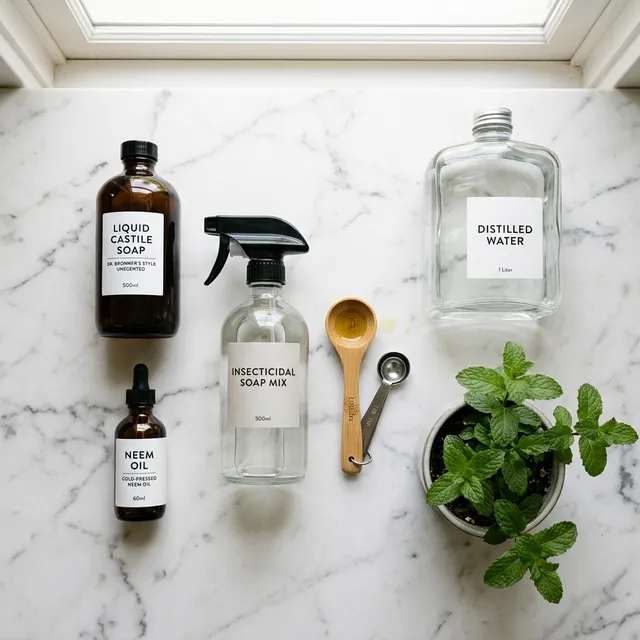
- 1 tablespoon pure liquid castile soap (Dr. Bronner’s Unscented)
- 1 quart distilled or filtered water
- Optional: 1 teaspoon vegetable oil for better leaf adhesion
Mix gently — don’t shake hard enough to create foam, which clogs spray nozzles. Our complete insecticidal soap guide covers every detail. For aphid-specific coverage and follow-up timing, use insecticidal soap for aphids.
How to Spray
Aphids cluster in predictable spots: stem tips, leaf undersides, flower buds, and where stems meet branches. Those are your targets.
- Spray the colonies directly until liquid drips off the leaves
- Flip every leaf to hit the undersides — this is where most aphids hide
- Work from top to bottom so runoff hits lower colonies
- Spray in early morning or late evening, never in midday heat
The Three-Spray Rule
One application won’t solve an aphid problem. Their reproduction cycle demands at least three treatments:
| Spray | Timing | What It Catches |
|---|---|---|
| First | Day 1 | Visible adults and nymphs |
| Second | Day 5-7 | Newly hatched nymphs from eggs laid before first spray |
| Third | Day 12-14 | Any survivors, breaks the reproduction cycle |
After three sprays, switch to weekly monitoring. Spot-treat new colonies immediately with a quick blast of soap spray before they can establish.
Method 2: Strong Water Blast
The simplest approach, and surprisingly effective for mild infestations. Grab your garden hose, set the nozzle to a focused stream, and blast the aphids off your plants. Most wingless aphids can’t climb back once knocked to the ground.
This works best on:
- Sturdy plants (roses, fruit trees, established vegetables)
- Early-stage infestations before colonies are dense
- Plants where you want zero residue of any kind
Do this daily for a week. It won’t catch every aphid, but it keeps populations from reaching the explosive growth phase.
Don’t use this method on delicate seedlings, fresh transplants, or plants with fragile flower buds. The water pressure will cause more damage than the aphids.
Method 3: Neem Oil
Where insecticidal soap is a contact killer, neem oil is a systemic disruptor. The azadirachtin in cold-pressed neem oil gets absorbed by plant tissue and affects any insect that feeds on treated leaves for 3-7 days after application.
For aphids, neem is most valuable as a follow-up to soap spray. Use soap to knock down the active population, then switch to neem for ongoing protection. Our neem oil insecticidal soap recipe combines both into a single spray for maximum effectiveness.
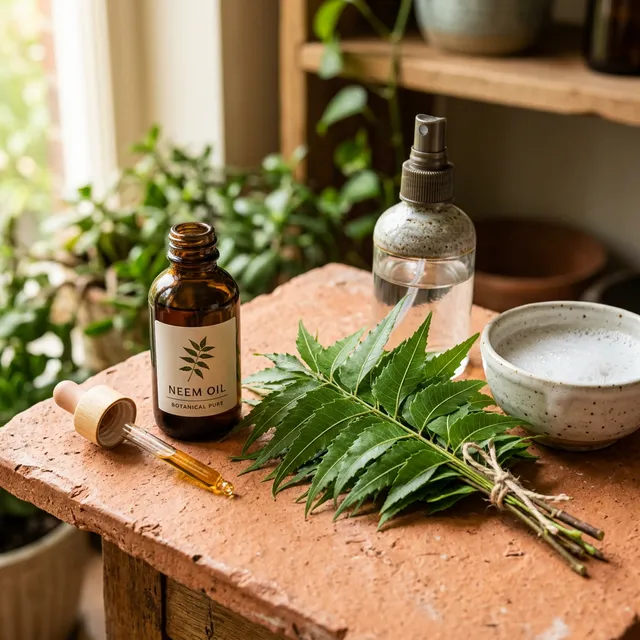
Neem aphid treatment: Mix 2 teaspoons cold-pressed neem oil with 1 tablespoon castile soap and 1 quart warm water. Apply every 7-10 days. Neem also prevents aphid reproduction, so even aphids that survive the spray produce fewer viable offspring.
Method 4: Beneficial Insects
Nature already built the perfect aphid control system. You just need to invite it in. How to attract beneficial insects has the habitat setup.
Ladybugs
A single ladybug eats 50-60 aphids per day. A larva eats even more during its development period. Attract them by planting dill, fennel, yarrow, and dandelions. You can also purchase live ladybugs, but released insects often fly away within 48 hours unless food (aphids) and habitat (diverse plantings) are present.
Release tip: Water the garden at dusk, then release ladybugs at the base of infested plants. The moisture encourages them to stay, and the darkness prevents immediate flight.
Lacewing Larvae
Called “aphid lions” for good reason. Lacewing larvae are voracious predators that eat aphids, thrips, mealybugs, and small caterpillars. The adults are less useful for pest control — they mostly eat nectar and pollen. Plant coreopsis, cosmos, and yarrow to attract egg-laying adults.
Parasitic Wasps
These tiny, non-stinging wasps lay eggs inside aphids. The developing wasp larva consumes the aphid from within, leaving behind a swollen brown husk called a “mummy.” If you see bronze-colored, puffy aphid bodies on your plants, parasitic wasps are already working. Don’t spray those areas. Let them finish the job.
How to Keep Beneficial Insects Around
- Plant a diversity of flowering plants, especially umbel-shaped flowers (dill, fennel, parsley, Queen Anne’s lace)
- Leave some garden areas slightly wild — beneficial insects need shelter and overwintering spots
- Avoid broad-spectrum spraying, even with organic products. Spray only the infested areas
- Accept a baseline aphid population. Some aphids are food for your defenders. Zero aphids means zero reason for ladybugs to stick around.
Method 5: Companion Planting
Certain plants repel aphids through the volatile compounds they release. Planting them near aphid-prone crops creates a chemical barrier that confuses or deters incoming aphids.
Proven aphid-repelling companions:
| Plant | How It Works | Best Planted Near |
|---|---|---|
| Chives and garlic | Sulfur compounds mask host plant scent | Roses, tomatoes, peppers |
| Basil | Estragole repels aphids and flies | Tomatoes, peppers |
| Marigolds | Pyrethrin and limonene deter many insects | Garden borders, between rows |
| Nasturtiums | Trap crop — attracts aphids away from vegetables | Near beans, squash, cucumbers |
| Catnip | Nepetalactone repels aphids and mosquitoes | Garden borders (contains aggressively) |
| Dill and fennel | Attract aphid predators (lacewings, ladybugs) | Near any aphid-prone crops |
Nasturtiums deserve special attention. Rather than repelling aphids, they attract them. Plant nasturtiums as a “trap crop” at the garden’s edge. Aphids colonize the nasturtiums instead of your vegetables. Once the nasturtiums are loaded with aphids, pull and dispose of them, or let predators feast.
For a deeper look at pest-repelling plants, see our guide to plants that repel bugs and companion planting for pest control.
Method 6: DIY Garlic-Pepper Spray
For gardeners who want something stronger than plain soap, a garlic-pepper spray combines repellent action with contact irritation.
Blend 4-5 garlic cloves and 2 hot peppers with 1 quart of water. Strain through cheesecloth, add 1 tablespoon castile soap, and pour into a spray bottle. The capsaicin irritates aphids on contact, while garlic’s sulfur compounds provide residual repellent effect for a few days.
Our full garlic pepper soap spray recipe has detailed proportions and safety notes. Wear gloves when handling the pepper concentrate, and don’t touch your eyes.
Method 7: Diatomaceous Earth
Food-grade diatomaceous earth (DE) is a fine powder made from fossilized diatoms. The microscopic sharp edges cut through insect exoskeletons, causing dehydration. It’s most effective against crawling insects, but works on aphids that walk across treated surfaces.
Dust DE on the soil surface around infested plants and on lower stems. It creates a barrier that ants — which actively protect and farm aphid colonies — cannot cross without injury. Removing the ant bodyguards often lets natural predators move in and handle the aphid problem.
Critical limitation: DE stops working when wet. Reapply after rain or heavy watering.
Method 8: Pruning and Physical Removal
Sometimes the fastest fix is a pair of pruning shears. If aphids are concentrated on a few shoot tips or flower buds:
- Snip off the infested growth
- Drop it immediately into a bucket of soapy water
- Don’t toss it on the ground where aphids can climb to new plants
- Dispose in a sealed bag, not your compost pile
For small colonies, put on a pair of gloves and crush the aphids between your fingers by running them along the stem. Not elegant, but it works in seconds without mixing a single spray.
Building an Aphid-Resistant Garden
Killing aphids is reactive. These practices reduce aphid pressure before they arrive:
Reduce nitrogen. Excess nitrogen fertilizer produces the soft, sappy growth aphids crave. Switch to balanced or slow-release organic fertilizers. Compost provides steady, moderate nutrition without nitrogen spikes.
Water properly. Drought-stressed plants emit chemical signals that attract aphids. Consistent, deep watering keeps plants healthy enough to resist and recover from feeding damage.
Diversify your plantings. Monoculture rows of the same crop are an open buffet for aphids. Mixed plantings with herbs, flowers, and different vegetable families confuse pest navigation and support predator populations.
Inspect new plants. Nursery plants are a common aphid vector. Check every new purchase carefully before planting, especially under the leaves and at stem tips. A one-week quarantine in a separate area prevents introducing aphids to your established garden.
Clean up in fall. Many aphid species lay overwintering eggs on plant debris and bark. Removing spent plant material and fallen leaves in autumn eliminates a significant portion of next year’s aphid population before spring even arrives.
The Integrated Approach
No single method eliminates aphids forever. The most effective strategy layers multiple approaches:
- Prevent — companion planting, balanced fertilization, diverse garden design
- Monitor — weekly inspections catch colonies at 10 aphids instead of 10,000
- Physical first — water blast or hand removal for small colonies
- Soap spray — insecticidal soap for active infestations
- Neem follow-up — systemic protection between spray sessions
- Encourage predators — habitat for ladybugs, lacewings, and parasitic wasps
This is integrated pest management in practice. It takes more thought than reaching for a bottle of synthetic pesticide, but it builds a garden that gets more resilient each season rather than more dependent on chemicals.
Start with the soap spray for immediate relief. Then work backward through prevention steps to make sure you’re addressing the root causes, not just the symptoms. Coverage, 5–7 day repeats, and species notes live on insecticidal soap for aphids.
Listing checks before you buy
A second RTU bottle will not fix a spray that missed the colony. These are Garden Soap Team checks — not Amazon copy.
- When DIY is enough: A 1% castile mix plus a water blast handles most aphid colonies. Buy a labeled concentrate only if you want printed rates or you will not mix.
- Soft water vs hard water: Hard tap water makes kitchen soap look “weak.” Distilled or rainwater first. Scum in the bottle is chemistry, not a failed brand.
- Plant sensitivity: Patch-test on peppers and stressed transplants. Underside coverage matters more than a stronger mix.
- Concentration: 1 tablespoon unscented castile per quart. Do not boost the mix because aphids came back — they came back because soap has no residual and eggs hatch. Add neem oil insecticidal soap for between-spray feeding disruption, not more detergent.
Frequently Asked Questions
What kills aphids instantly and naturally? ▼
Insecticidal soap kills aphids within minutes of direct contact. Mix 1 tablespoon pure castile soap with 1 quart water and spray directly onto aphid colonies. The potassium salts dissolve their soft body coating, causing rapid dehydration. A strong blast of water from a garden hose also dislodges them instantly.
What is the best homemade aphid killer? ▼
A castile soap spray (1 tablespoon soap per quart of water) is the most effective homemade aphid treatment. For stubborn infestations, add 1 teaspoon of cold-pressed neem oil for systemic protection that lasts between sprays. Apply every 5-7 days for three cycles to break their reproduction.
Do banana peels get rid of aphids? ▼
Burying banana peel pieces around plant bases has anecdotal support but no scientific evidence for aphid control. The theory is that aphids dislike the compounds released as peels decompose. Proven methods like insecticidal soap, neem oil, and beneficial insects are far more reliable.
Why do I keep getting aphids on my plants? ▼
Aphids target plants with excess nitrogen from over-fertilizing, which produces the tender new growth they prefer. Stressed plants, monoculture plantings, and the absence of natural predators also invite repeat infestations. Diversify your garden, reduce nitrogen, and encourage ladybugs and lacewings.
Will vinegar kill aphids? ▼
A diluted vinegar spray (1 part white vinegar to 3 parts water) can kill aphids on contact, but it also damages plant tissue at concentrations strong enough to be effective. Castile soap spray works better because it kills aphids without harming your plants when properly diluted.
 ✓
✓ The Garden Soap Team writes every recipe and guide on this site. Formulas follow published horticultural guidance — university extension resources, the UC IPM program, and OMRI standards — and we cross-check concentrations and plant-safety warnings against documented gardener experience before publishing. No harsh chemicals, no guesswork passed off as expertise.
📚 Related Articles
guidesInsecticidal Soap for Aphids
Aphids die on contact if you wet the colony and the leaf underside. Coverage, 5–7 day repeats, and when to add neem instead of more soap.
 guides
How to Make Insecticidal Soap at Home
Core 3-ingredient method: 1 tablespoon unscented castile per quart, leaf-underside coverage, and the mixing mistakes that burn plants.
 recipes
Neem Oil Insecticidal Soap Spray
Soap knocks pests down; neem adds a few days of feeding disruption. Mix ratios, evening timing, and when plain castile is still enough.